
12th October, 2025
The Bukit Brown Wayfinder by all things Bukit Brown
The Bukit Brown Wayfinder, a new self-guided trail of 32 graves with signage covering Hills 1 and 3 of Bukit Brown Cemetery at Lorong Halwa, has been launched. During the open house this afternoon, about 30 educators from secondary to tertiary institutions were invited to experience the trail with Guest-of-Honour Minister of Education Desmond Lee.
The profiles reflected along the Wayfinder trail are the collective stories of Singapore’s Chinese migrant society since the 1800s. These narratives include characters from coolies (indentured labourers) to compradors (bankers); Christmas Island labourers who mined phosphate and were employed by the Ong Sam Leong family, who were also pioneers in the mass entertainment industry with The New World amusement park; towkays (business owners) who owned twakows (bumboats) that ferried goods from the harbour to godowns along the Singapore River; pioneers in education who founded the Nanyang and Singapore Chinese Girls’ Schools; opium kings going head on with a few good men from the abolitionist camp; and the victims and heroes of World War II.
Embedded in all the tomb signage are QR codes that open up to essays about the individuals, with their stories packed with context and connections to the times lived.
As the terrain of the trail is uneven, the route markers are supplemented with online video directions to help navigate from one tomb to the next. All the tombs on the Wayfinder are visible from the road that circumvents Hills 1 and 3.
The starting point is a four-panel storyboard on the concrete platform located at Hill 1. It covers 1) Wayfinder: how to navigate the trail safely; 2) Heritage: material culture of the tombs, what they symbolise and how they relate to the rites and rituals practiced; 3) Habitat: highlights of the species of flora and fauna that are found in the cemetery; 4) History: our migrant story of the Chinese diaspora.
Learning Journey package for Schools
Bukit Brown is further enriched as an outdoor classroom with a new Learning Journey package, which will be made available to teachers to curate meaningful experiences with and for their students.
It has lesson plans, sample worksheets, as well as topics to discuss and debate with a comprehensive list for further research. The Learning Journey leverages on the physical and digital platforms of the Bukit Brown Wayfinder.
Background
Today’s Bukit Brown Wayfinder is a new iteration of the system that was first launched in November 2017. Out of the 32 tombs featured, 13 are newly added. The additions of the digital platform and a Learning Journey package for schools are catered to current trends of sharing information effectively by tapping on social media platforms.
The project has been made possible with a grant from the National Heritage Board, a donation by the Tan Ean Kiam Foundation and public donations. We are grateful to all who contributed in one way or another.
About all things Bukit Brown (atBB)
We are a volunteer community who came together in 2012 at the news of the development of Lornie Highway and have been walking the grounds since. Our projects include two exhibitions, a book on World War II at Bukit Brown and the Wayfinder in Bukit Brown. We also organise free public walks that tell the Singapore story through the colourful personalities buried at Bukit Brown.
Follow us on our instagram : : https://www.instagram.com/bukitbrownwayfinder/
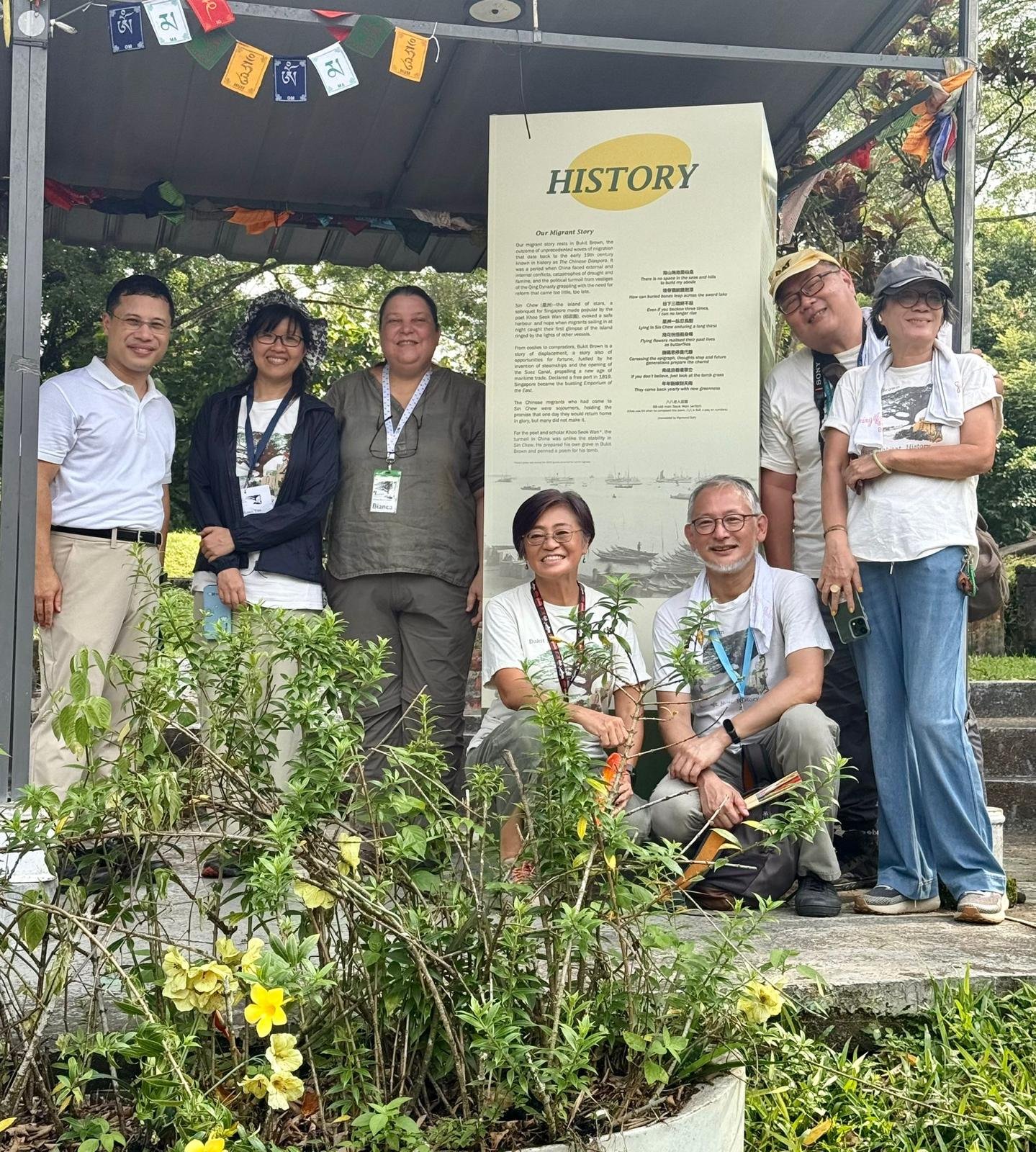
Team brownies with Minister Desmond Lee
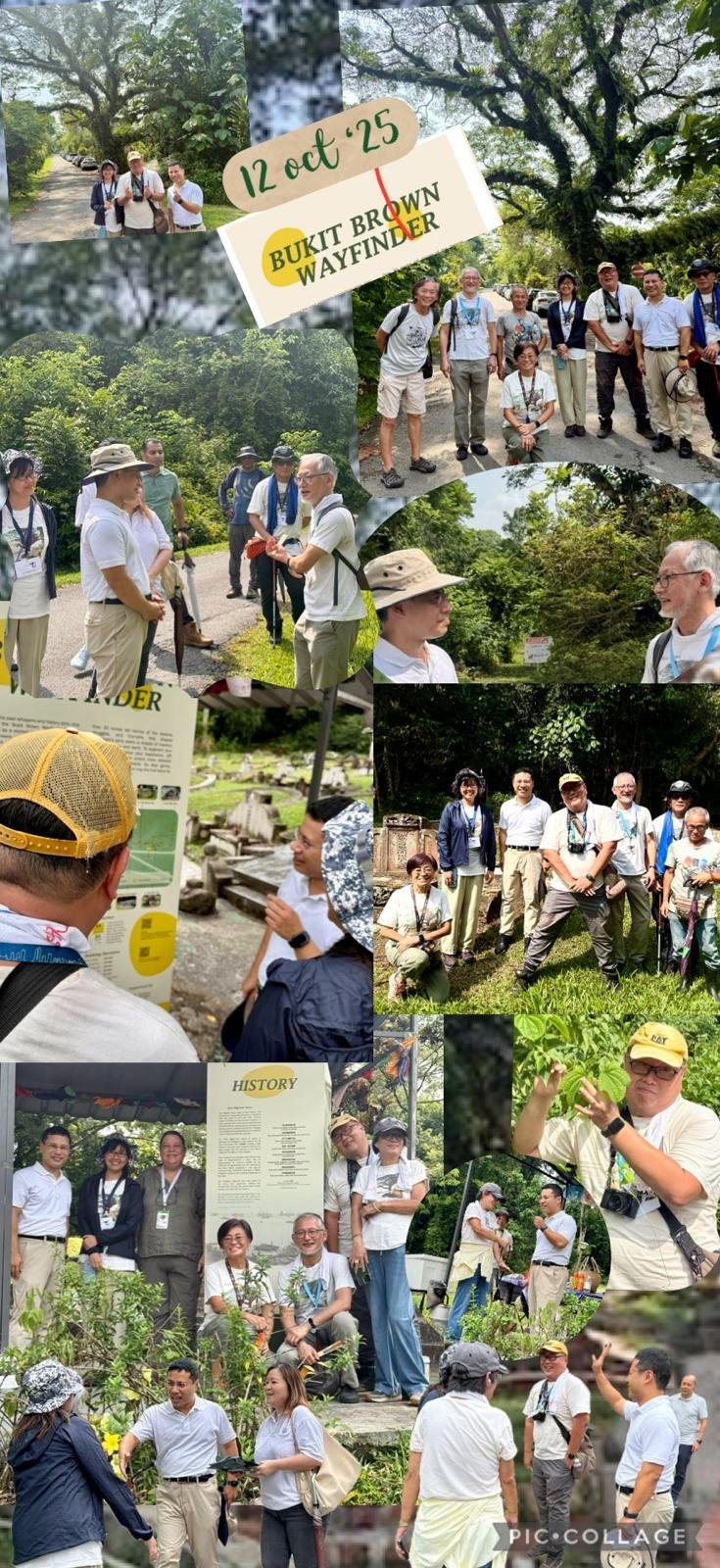
Photo collage expression of the Open House launch by teacher Sant Kaur
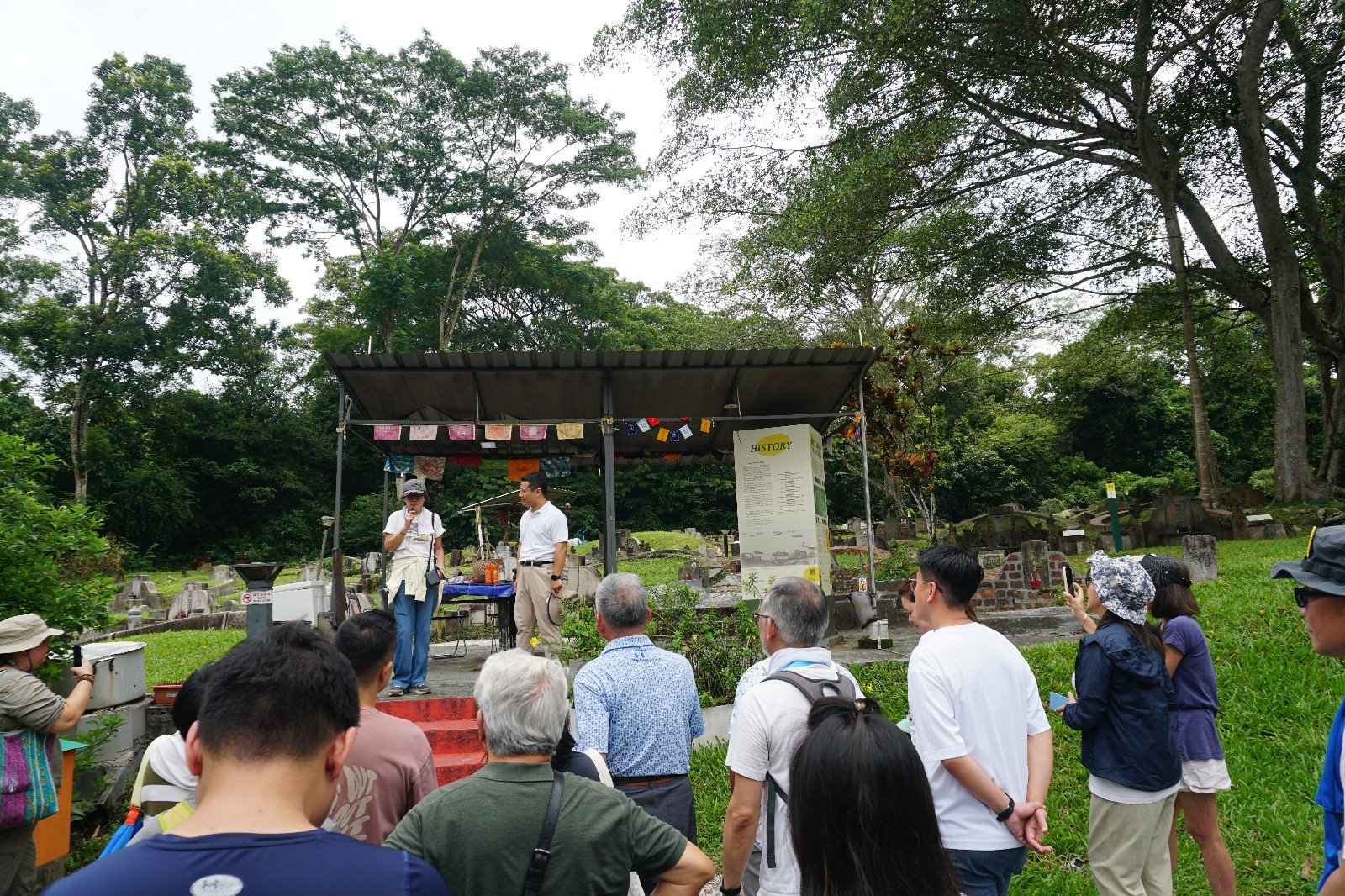
Teachers and descendants among the guests who spent Sunday afternoon with brownies exploring the new Wayfinder trail.
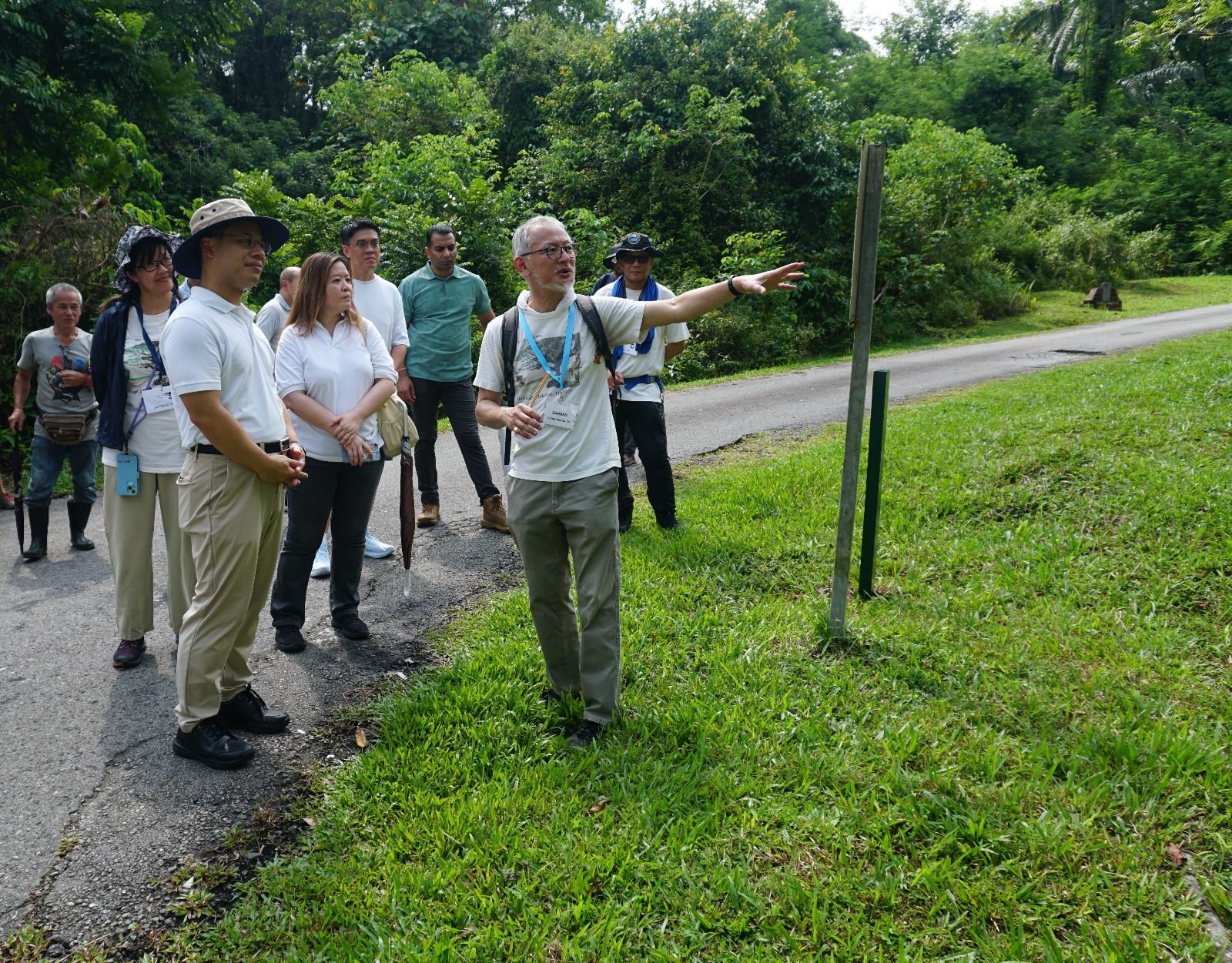
Brownie Darren Koh in action, telling the story behind the story
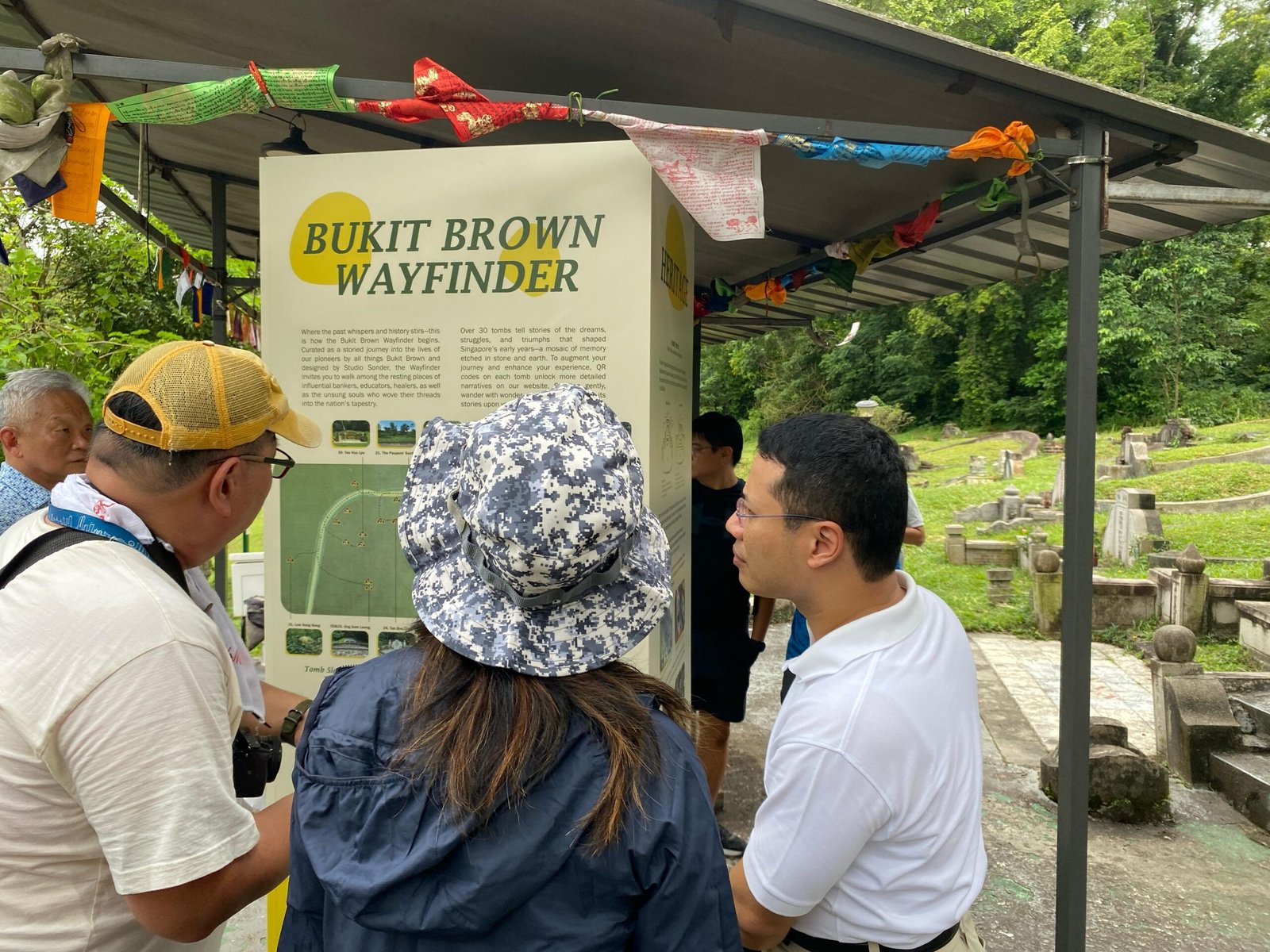
Checking out the Wayfinder storyboard on how to navigate the trail safely. Snap a photo of it to help you when you visit.
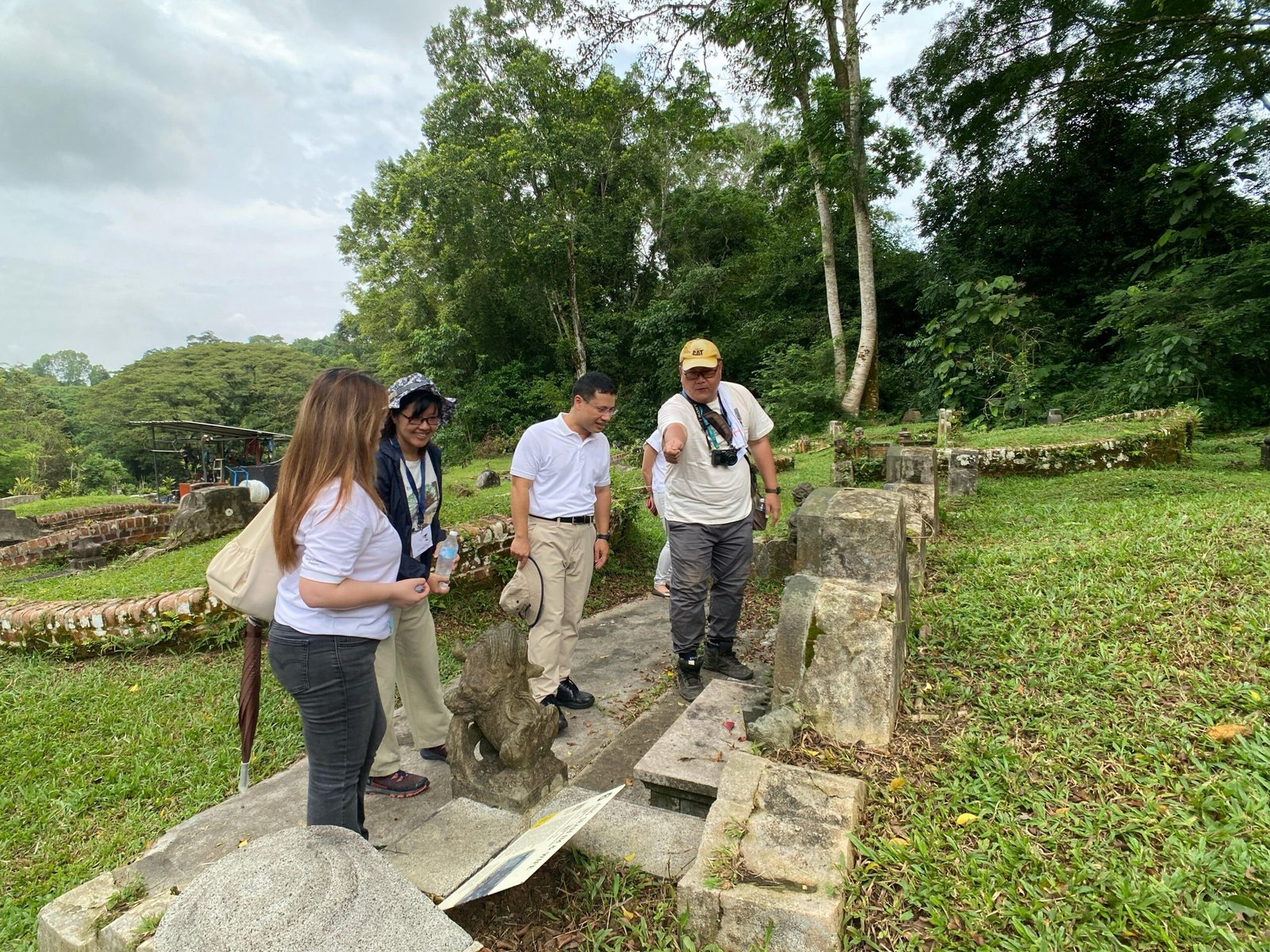
“This one has a hawker center named after him, I think it is in your constituency Minister” says Peter Pak
Download the DIY Bukit Brown Wayfinder guide here

9th February, 2024
The Year of The Dragon – The Cusp of a New Cycle
“January 23, 2012 to February 9, 2013 marked the Year of the Dragon. According to tradition, the dragon is the fifth animal in the Chinese zodiac and symbolizes loyalty — it is noble, gentle, and intelligent, but also tactless, stubborn, and dogmatic. “ New York Public Library
2012 was the year a nascent community from different disciplines and interests – IT engineers, journalists, a pharmacist by degree, a librarian, academics, artists, teachers, students, nature lovers, heritage proponents, authors, film makers, lawyers, the tomb keepers, the former residents of the Kampong at Lorong Halwa, a cartographer, descendants of the stones and the local and international media – emerged, each to play their part in generating awareness that there is this 100 year old municipal cemetery called Bukit Brown, that sits in the center of our island where the stones tell stories of the past and the flora and fauna breathes life into it. And the government wanted to build an eight lane highway that will cut Bukit Brown in half, cleaving apart 100 years of heritage, habitat and history.” It is a rare original WWII site that saw one of the last and fiercest battles on the rolling hills of the land.
Chapter I: How it began…..
The first official engagement with the government under the Ministry Of Development went badly. While the Minister was abroad, his senior civil servants were engaging with civil society on a date to meet him. We wanted a consultation and an opportunity to ask what were the alternatives that had been considered.
By the time a date was found – it took about three weeks – the circumstances of the meeting had changed. First there were “outsiders” those in heritage circles but Bukit Brown was not necessarily a priority. This was not the scenario we had envisaged when we met at the Nature Society’s HQ at Geylang. We came from roughly seven different organisations/communities including one newly minted, all things Bukit Brown, feeling their way in tentative steps through civil society.
The response to the meeting or more accurately the briefing by the then Minister of National Development was an immediate media statement calling for a moratorium on the roadworks signed by The Nature Society of Singapore(NSS), The Singapore Heritage Society (SHS), Post Museum, Green Drinks, The Rail Corridor, API, (paranormal group) and all things Bukit Brown.
Both NSS and SHS had led the email negotiations to pin down a date and an agenda to bring up to the Minister. And the way the emails were going, we knew that was a 99 percent chance, we would not get the meeting we requested. Instead the Minister announced the plans from exhumation to construction of the highway in a PPT, with a concession that the whole process would be documented. A suggestion that a heritage advocate had suggested to the CEOs of URA & LTA when they invited him for a morning prata to ask his opinion. It was indeed a prata flip. Aside from the seven groups, there were heritage bloggers, representatives from clan associations, The Peranakan Association government agencies, , the Preservation of Monuments Board and the National Heritage Board.
The fact that seven groups from civil society including the two most established the nature and heritage societies, issued a statement disagreeing at the haste the decision was reached without genuine consultation, made headline news. Bukit Brown was after all, one of our oldest Chinese cemeteries and the mother of all cemeteries with many remains reinterred there because of major developments where they were first laid to rest. Their burial grounds , had made way for HDB estates such as Queenstown, and so in the past time and time again, the dead had to make way for the living. This was different, an 8-lane highway. In today’s context with climate change a critical and existentialist issue, questions would have been raised why are we encouraging car ownership? Could nothing be done with the then Lornie Road, only eight years in existence ? They were raised then, almost prescient. Back and forth, like a ping pong game, with the ball falling into the government’s side of the table in a staccato volley. We were called naysayers, unsympathetic to motorists and asked to offer solutions to solve traffic jams.
Then the government announced that they had taken on feedback and as a concession to civil society realigned part of the highway as a bridge. It was the most natural of realignments as the previous plan would involve building the highway into a valley. What had happened was that the Nature Society of Singapore had submitted the proposal independently to allow space under the bridge for animals to pass and shady plants that did not need much sunlight, It did save a few graves from certain “death”. The concession by the authorities was much lauded in the media as an indication that the government of the day was not recalcitrant and was responsive. With that, the first chapter of our journey came to a close.
Chapter II Letting Go……
Two communities, Post Museum and all things Bukit Brown moved on and forward, to continue to conduct public guided walks to spread awareness, the latter community branched into themed walks such as World War Two at Bukit Brown hooking up with a war archaeologist from the UK, whose family was stationed in Singapore because of his wife’s career. He had found himself living on the doorstep of the battleground around the black and white houses in Adam Road and later explored the Mount Pleasant black and whites the Japanese had occupied. He started to conduct WWII guided walks detailing battlegrounds that covered the Island Club links into Bukit Brown proper including the names of soldiers who are still missing and their last known locations. Their remains may very well lie under the highway – grist embedded in the concrete – even as their names are acknowledged at the Kranji War Memorial.
Outside of Bukit Brown, Post Museum which is an arts group helmed by a husband and wife team, secured a grant for an exhibition held at SAM, the Singapore Art Museum. They were to curate other exhibitions at the Substation and the exhibition space in Bencoolen Street of La Salle College. And they have taken the Bukit Brown “index” to the USA. Days before the exhumation exercise was to start, they arranged a candlelight remembrance and lit up the entrance into Bukit Brown. That entry into the cemetery is no longer, absorbed now into the Lornie Highway.
Particularly poignant in Post Museum’s first exhibition at SAM was an installation where the names of the deceased who had to make way for the highway were written in chalk on a big wall by volunteers and the public, with a photo collage of some of the volunteers at their special/favourite spot in Bukit Brown. The GOH for the opening was Ms Jane Ittogi, the present First Lady who was Chairman of SAM then. Ms Ittogi was to later be the GOH for a brownie event, – brownies, that’s how the community of volunteers under the banner of all things Bukit Brown are known to the public. It was to be a much bigger event over a weekend with exhibitions of artifacts including a letter written in romanised Hokkien, presentations on nature and heritage, and a screening of a documentary, Light On Lotus Hill about the efforts here to assist in logistics in support of the Sino-Japanese war. It was a collaboration with the Chui Hway Lin Teochew Club. It followed very soon after atBB also curated the first exhibition at The Substation partnering the Singapore Heritage Society and the Sub. In the meantime, an 8 part TV series called “History from the Hills” debuted with Bukit Brown as the central space, telling the story of Singapore from pre colonial times to independence. It was to be dubbed into both Mandarin & Malay in years to come.
Along the way, the new kid on the civil society block, picked an award from the inaugural Singapore Advocacy Awards celebrating the best and most promising in civil society. It was more than encourage, it sealed, resolved.

The inaugurals Singapore Advocacy Awards with members of the community.
But it was the international media who took up the gauntlet to source alternative views, different angles to the issue The BBC, CNA, and Reuters had correspondents based here. Brownies were interviewed on air and quoted in print. They sent in questions to the government but they had no comment. The Economist correspondent and the family of husband and wife with one young son and a mangy and lovable Singapore special lived near Bukit Brown. They treated Bukit Brown as their backyard and had joined the brownies in their explorations, “bush bashing “ together in areas tight with above and under growth. He blogged it in The Banyan. A Singapore artist and former photojournalist with the local media and her partner, a Pulitzer prize winner for journalism who flew in from New York for the Singapore Writers Festival, arranged to visit the site with brownies and an academic in tow, and somehow managed to gained access to the storage where the tomb artifacts of exhumed graves were stored and snapped a few choice photos. And so that was how Bukit Brown Cemetery and us found ourselves in The New York Times in a feature article.
Chapter III Gaining Traction & The Message in the Bottle
“People with Chinese zodiac dragons born in 2012 have great vision and ambition. In addition, they are full of patience and persistence. Therefore, they can achieve success in their career field easily. They are bold people full of justice and energy, and they like to help people who are in trouble. They have good interpersonal relationships, because they care about friends carefully. They have a unique style and can give everyone an interesting chat when they are in a low mood.”
We are not sure that accurately describes the community but time has proven we are patient and persistent. An application was made to the World Monuments Fund, to have Bukit Brown Cemetery recognised as a historical and heritage site under threat from an impending highway. We got it, the first site in Singapore to gain this recognition. It was for two years 2013 an 2014. When the news broke, most of us were at a temple dinner.
We held a media conference in Bukit Brown and had fairer coverage. Meetings followed with the National Heritage Board, there was to be no u-turn for the highway, so we simply went with tapping grants from the Board, and the result was a book, WWII@Bukit Brown launched in 2016, an anthology of stories with contributions from heritage enthusiasts who charted the military movements from both sides of the divide. And the brownies themselves shared stories they researched and encountered on the grounds of Bukit Brown. But the heart of the book were stories from the descendants whose young men had been taken away by Sook Ching – and the equivalent of a pogrom. It also included other tragic deaths, the story of how an elder sister and also an aunt, was killed by shrapnel from a bomb, protecting her mother, a younger brother and a niece. She was only 19 years old, with a steady boyfriend. The chapter was called “ Lost Promises” And that was exactly what WWII had wreaked on the island, a palpable loss.
We followed the book with Wayfinder@BukitBrown, a curated trail with directional signage and information boards for graves both prominent and poor in easily accessible areas, by pathways and areas where descendants clustered around a set of tombs had their tomb keepers maintain the tombs of the ancestors.
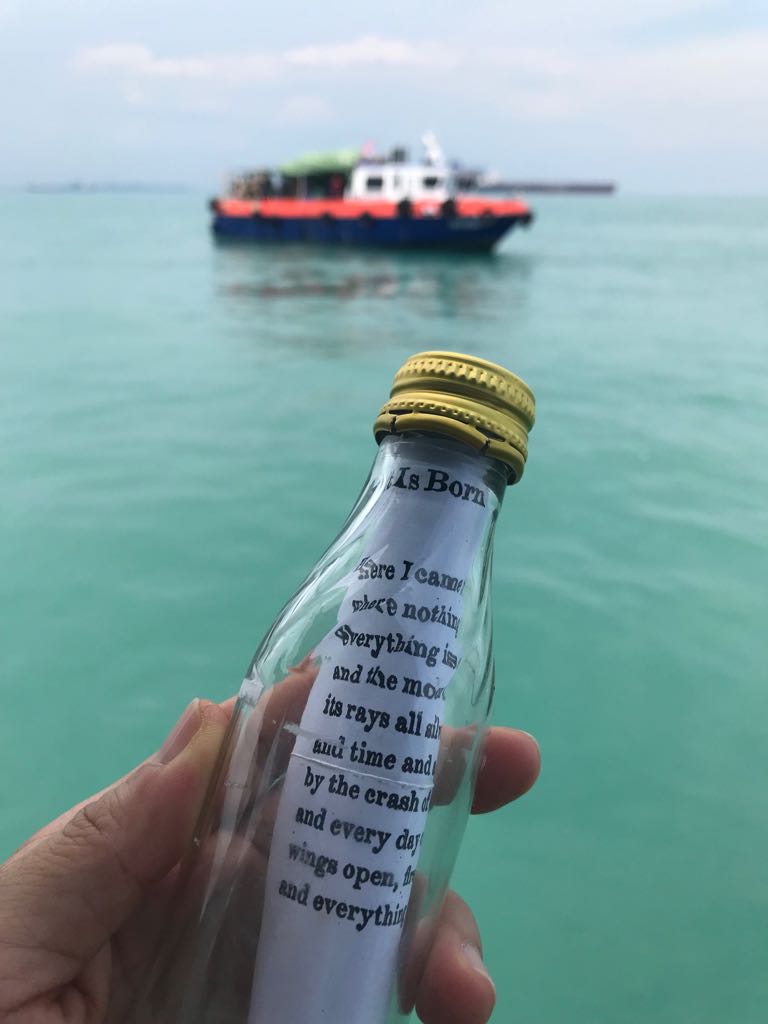
And sometime after Wayfinder was launched, we witness the sea burial of the unclaimed remains of those exhumed for the highway into the waters with a message in a bottle. By sheer dint of fate, a last minute claim was made on the eve by a friend of the brownies, so one less went into the waters. The same waters where their ancestors once sailed through perilous journeys borne by uncertain winds and currents until they reached safe port in “Sin Chew” a sobriquet popularised by the poet Khoo Seok Wan as the “island of stars”; their first glimpse when they arrived at night, the lights from the vessels, necklaced the island. Khoo was himself affected by the highway. The Sun Yat Sen Memorial Hall made a claim for his tomb. So he is memorialised, ironically by his tombstone.
Chapter IV It Won’s be to Long, now ……..
IT WON’T BE TOO LONG: THE CEMETERY (DAWN & DUSK) by Drama Box staged as part of the Singapore International Festival in 2016 made a profound and powerful impact on the community, and gave the brownies both inspiration and validation.
Every year, we get requests from students doing their final papers for interviews or to be part of the documentary projects from Mass Comms students, and the occasional foreign media looking to refresh their stories of the country they have been posted to, just how does a cemetery tick the boxes of community, of heart, of a shared and painful past, of rebuilding, of the forging of a new found identity ? Like patchwork the different threads go into a blanket of stories, still being added to.
Over the years, we have received requests to make presentations from the tertiary institutions such as from the LKYPP, the soon to end Yale-NUS, to complement the walks. From schools to community and adventure groups, opposition parties and establishment, we walked with them and guided in a truly inclusive space. So the public guided walks continue to be our backbone even through lock down as we secured permission from STB, through an intermediary who believed in our efforts and had a long standing working relationship with STB. Boy, did we need the fresh air and sunshine, as we breathed maskless. But we were closely monitored for safe distancing and numbers.
We are thankful that all restrictions have been lifted. In the two years of covid, Bukit Brown was “under maintained”, so parts have grown lusher than before. Slowly but surely tho’ regular maintenance is being implemented as before. Not unusual now to see groups of three or four workers cutting the grass by the paths. So is life back to “normal” now?
Now on a Saturday, if you are lucky you may encounter a trio dubbed as “The Three Amigos” which includes a tomb keeper and sometimes a young warrior woman carrying kilograms of water for cleaning and it is said she keeps the amigos honest. Together they explore Bukit Brown and venture into the adjoining cemeteries of Lao Sua, Kopi Sua and Seh Ong, every Saturday and stop only for the CNY and Xmas holidays or when they are away for work or family. Sometimes they have “guests” with them, they are descendants who have requested assistance locating their ancestors. The reuniting of families to their roots is what keeps them grounded and going, bush bashing, recalling mysteries they encountered that now have answers, and they grow our compendium of a past lives brought into the present. Enough for another book, but that’s for the future. This year we consolidate.
We have been walking – walking the talk – now in a complete 12 year cycle of the Chinese astrological animal, the dragon, the one mythical creature among the twelve. Perhaps, there is something symbolic in that, that holds hope and a promise we are closer to our mission to protect Bukit Brown for future generations; descendants are returning to look for their ancestors, to connect with their roots, more young people are researching their family history, as always we “connect” them to their roots and to us, then back to you when we share their stories online in our FB groups, blogs or in our presentations. A virtuous and vibrant cycle.
As we welcome the new wood Dragon, we are in the process of working on version II of WWII@BukitBrown, It has been six years and during this time we have uncovered more stories and new material has been shared with us exclusively on the Japanese battle plan under General Yamashita including his annotations on the maps of what was to become Synona-to. We are grateful we have this exclusive through the generosity of a private, independent researcher of all things Japanese, who has focused on the war years from primary sources.
And we are relaunching Wayfinder, so coming your way is Wayfinder II. More tombs, more areas covered, to be launched with instagram interactivity. We hope to launch phase one covering the original Hills 1 and 3 with add ons by June’24. The designers have done the first two focus groups to find out what worked, what didn’t and what kind of content independent walkers are interested in.
If you have visited Bukit Brown and would like to take part in the next focus group, please contact our designers thestudiosonder@gmail.com.
Subject: Wayfinder II
Information needed: Name, Age, Gender, phone number and Status: student, working, not working or retired. The information is needed to ensure a representative demographic. If there are too many applications, the designers will only be able to contact you if you fit the demographic, and apologies to those who could not be accommodated this time and thank you!
As always on our big projects we bring in the Singapore Heritage Society to work with us, and they will be with us on the book and the wayfinder. On that pragmatic note, all things Bukit Brown would like to bring you back to what the Year of the Rabbit had visited upon the community. It was a year of realigning back to face- to- face meetings with the National Heritage Board who organised a focus group discussion with the Singapore Heritage Society, all things Bukit Brown, the Nature Society, descendants, the inter government agencies with oversight over Bukit Brown and educators. There is something afoot that would be announced, shortly .
Chapter V Farewell 2023 and Welcome 2024
In 2023, we count our collaboration with Temenggong-Artists-in-Residence, our most productive, enjoyable too, when we participated in their Zhong Yuan (aka Hungry Ghost) Festival. On opening night, their GOH was overheard remarking, “this is a living museum” as he gazed upon the grounds of the black and white houses, perched on a hill facing the old port, resplendent with grave artifacts above and below. Twice, he remarked “this is a living museum” Minister, there is one right in the center of Singapore, still vibrant and teaming with nature and humanity.
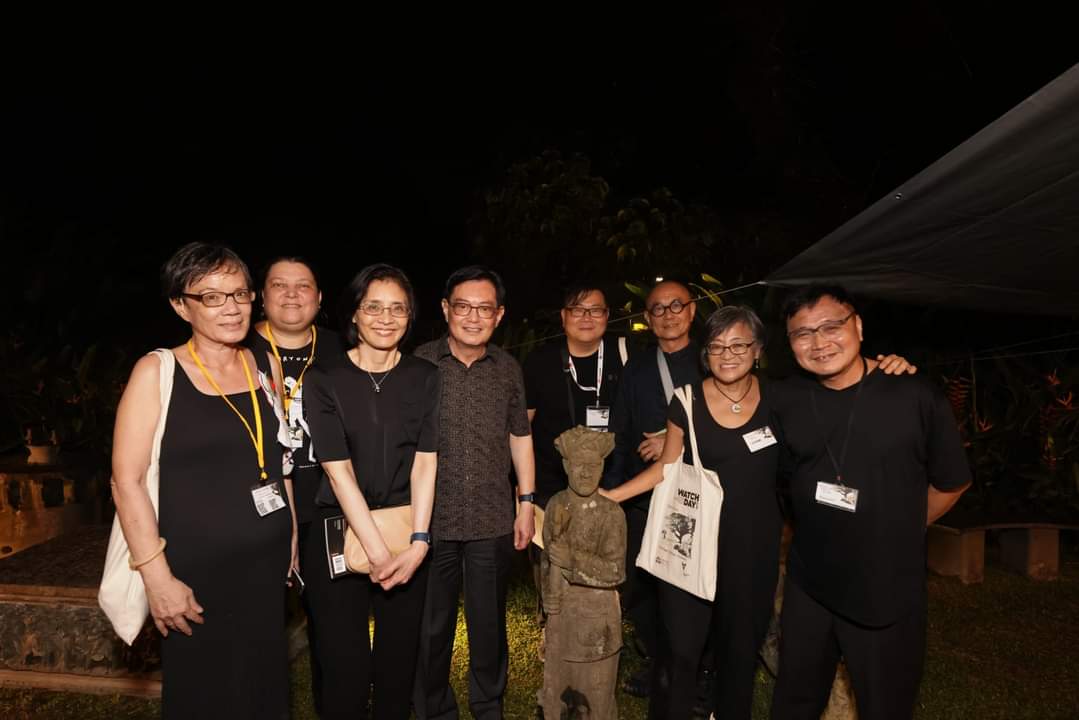
The country was galvanised by the Presidential elections. Perhaps the community had a soft spot for President Tharman, who had visited Bukit Brown when he was Deputy and Finance Minister then, with the documentation team and all things Bukit Brown. It was one stormy and lighting flashed afternoon when his entourage arrived. He and his wife Ms Itoggi took shelter at a home of a brownie. We were gratified they returned after the storm calmed, and went with the original itinerary covering four out of five hills. We finished late as the skies darkened and there was no light left ‘cept from our phones. And he asked us a question, and that question gave us hope.
So we look towards the Year of The Dragon with hope and our gratitude to you, our supportive community, we greet you with our very best “Huat” wishes, may the wood dragon not breathe fire unto himself! It means, continue your conversations, discussions and debates on Singapore Heritage – Bukit Brown Cemetery, but be polite and respectful, less the Dragon boots you out.
Be safe, be healthy, wealth in terms of currency ain’t what it’s cut out to bring. It is the prosperity and good fortune of living a virtuous life, lending a hand to those in need, looking out for your neighbour, to be kind – these are rewards within themselves. This is what we have learnt from the stones of Bukit Brown, and they have many lessons yet to give.
Message in a bottle ..
30th October, 2023
A post by Raymond Goh last evening, intrigued me as it was unraveled by tomb inscriptions. And then caught up in the moment, inspired me to compose a poem which I am sharing in this blog post. It has been reworked since but remains in essence in the same spirit. It goes like this:
An Ode to Beauty and Justice
The Father
Handsome is Mr. Koh,
brilliant, his path of justice
but sorrowful his birth,
for she was gone in a whisper,
and ‘tho he knew not a mother’s love,
yet, he remembered her, first,
when his first born was delivered,
he named her for his mother.
A second followed
both as good as their Papa,
Graced the halls of justice,
for such was their beauty,
equaled only,
to the unparalleled head turner of their dear Papa.
Ode to Beauty & Brains
The Daughters
So it came to pass, the daughters turned heads,
everywhere they went
Down under, especially where they schooled,
The younger, turned a beauty competition
Crowned, and together with her elder sister,
Claimed the prize, that was Melbourne,
Where they, you guessed it continued to turn heads,
More years passed,
And suitors came,
The older, turned the head of one Australian billionaire,
Settled down under,
The younger, the crowned beauty,
Turned the head of an actor from Hollywood.
~~~~~
Where are you now, Papa’s precious girls?
Because, we remember, you have never looked as beautiful
As when you were both on either side of Papa
With linked arms
~~~~~~
But here ends my ode to beauty and brains,
That was the family of Koh Choon Hong,
An ode that lingers, because there is beauty and grace in their story,
And one last unanswered question, still.
Where are you Shu and Tian?
papa misses you

Koh Choon Hong (from NLB archived, extracted from bukitbrown.org)
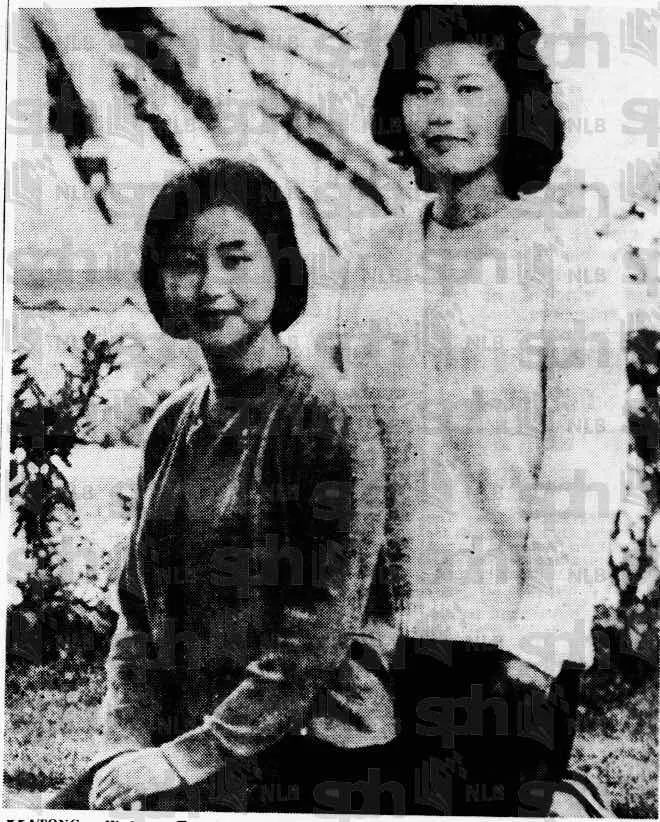
Puay & Tian (NLB archives extracted from bukitbrown.org)
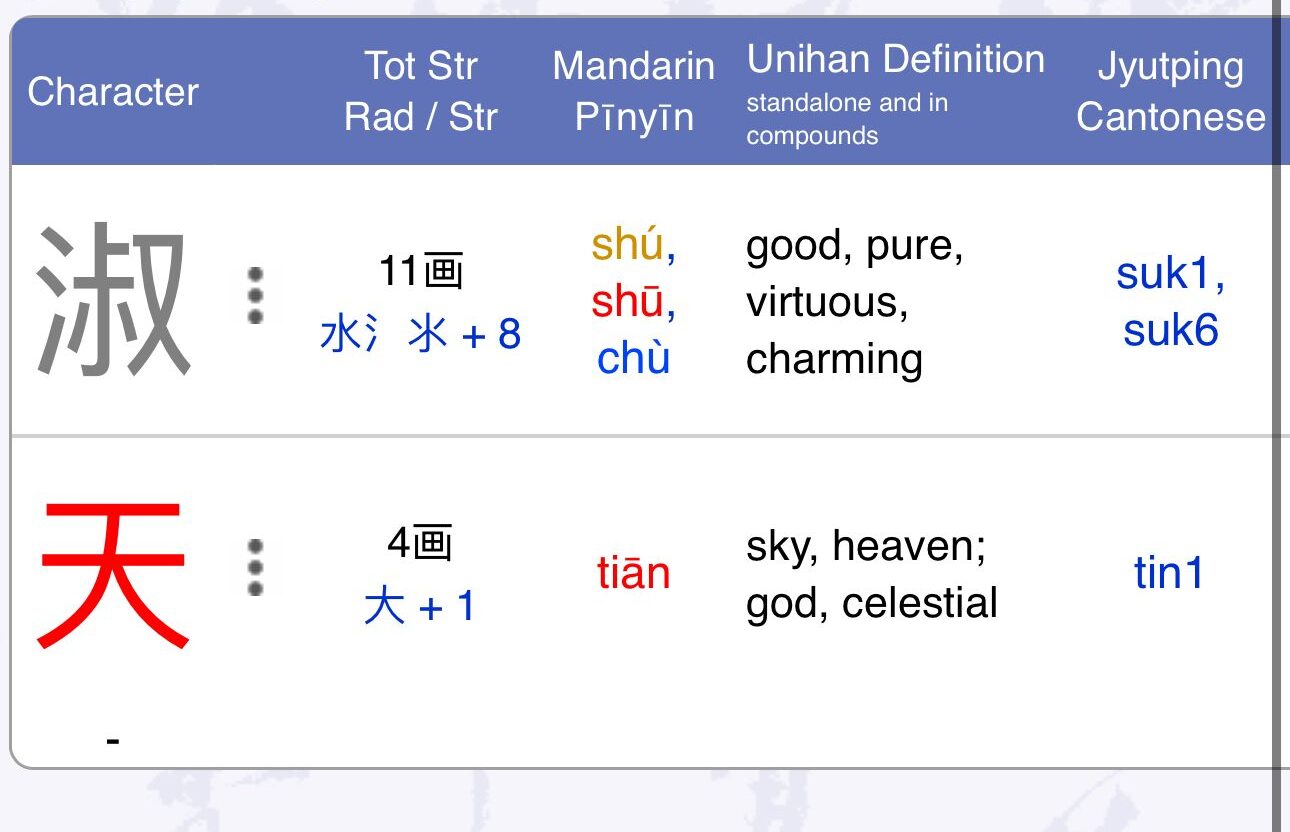
Special thanks to Raymond Goh for additional research into the meaning of the daughters’ names.
28 October, 2023
by Catherine Lim
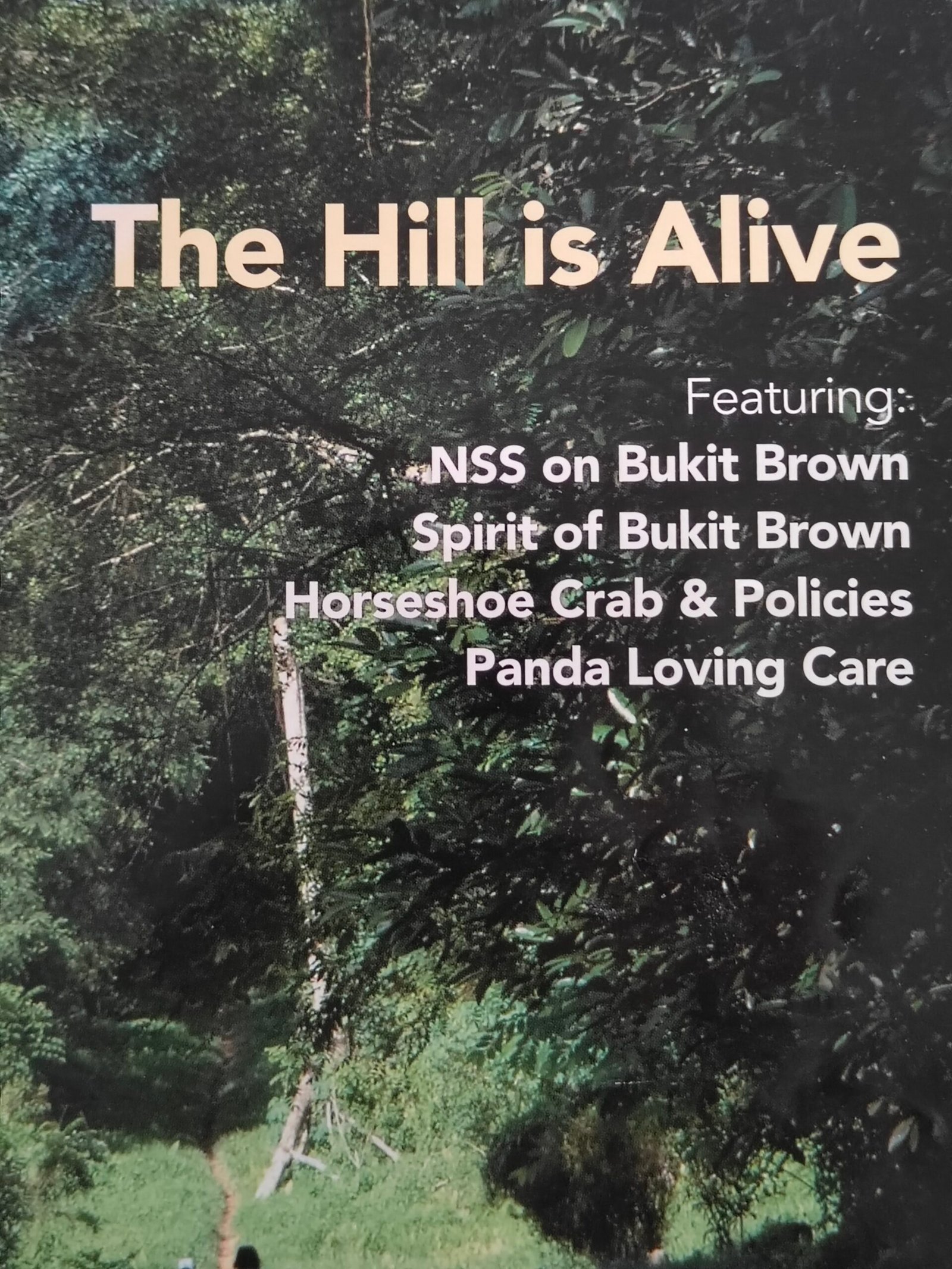
It was the April-Jun 2012 edition of Nature Watch, the Nature Society of Singapore (NSS) bi- monthly magazine of hot topics. This one featured the position paper and recommendations for Bukit Brown Cemetery together with a ed-op piece and photo feature titled “Spirit of Bukit Brown” The latter by Ilsa Sharpe, who was on a visit from Perth, which was now home. A revisit was undertaken in the light of news following the announcement of an eight-lane highway that would bifurcate the cemetery.
First Dr. Ho Hua Chew presented some of the reasons for preservation:
ECOSYETEM SERVICES
1) Carbon Sequestration
While our eco footprint is on par with that of first world nations then, “Singapore should take up the challenge of becoming not just a red dot to the world, given that the crisis of global warming has intensified to an alarming degree.”
12 years later climate change is an existentialist crisis. Globally, governments have had to face extreme weather devastation from blistering heat to numb blinding cold. Mitigating climate change requires new sustainable and equitable goals. There is a place for Bukit Brown in this.
2) Natural air-conditioning. If you have ever been to Bukit Brown, then you will have felt what I mean. Nothing more to say.
3) Rainfall sponge. It rains often in Singapore, but it also evaporates fast in our concrete jungle, the wooded areas of Bukit Brown, retains water, and “allow a slower percolation of water into the ground.” This helps prevent or reduce floods.”
Biodiversity
With the formulation of the Master Plan for the Conservation of Nature which was published, NSS had been monitoring the bird life in Bukit Brown.
Their highlights:
94 resident and migrant bird species have been recorded. That’s 26% of 364 bird species recorded under the NSS checklist in 2007. “Impressive” is how Ho describes this figure, given the landscape is mainly woodland.
Nationally threatened birds include the White-bellied Woodpecker (critically endangered and rare). The Spotted Wood Owl and Grey-headed Fish Eagle all in the same category of rare, and critically endangered; 56 species listed in the Red Data Book is 27%, making the cemetery an important site for biodiversity conservation.
Forest Birds – Extended Habitat
Bukit Brown serves as an important habitat and foraging ground for many forest species. Their presence which includes the Malkoha, Asian Fairy Bluebird and Black-headed Bulbul is probably due to over-crowding, especially at the Macritchie Forest part of the Central Catchment Nature Reserve (CCNR)., opposite Lornie Road where Bukit Brown is located. There is also a disconnect with the reservoir and the golf course at Sime Road to the west, and the dam and open ground to the east.
From Bukit Brown it is “a skip and a hop” to the Southern Parks and Ridges. With the cemetery situated south of CCNR, it acts “as a bridge” to include Botanic Gardens to the Istana and Fort Canning. Bukit Brown facilitates as close to a contiguous route for forest birds to the South.
An interesting record of a Large Flying Fox was sighted close to the expressway transect area. A common sight in the past, it is now nationally extinct. It was probably a visitor from Johor or Indonesia. It is a rare sighting which indicates Bukit Brown holds promise for other wildlife apart from the birds.
Since this article was written, there have been sightings by the tomb keepers of the rare Sunda Pangolins as reported by all things Bukit Brown.
To summarise the impact of an eight- lane highway:
The expressway approximately 2 km in length cuts through the area close to MacRitchie Forest, going diagonally across the only big valley with a flowing river, and I would add the most beautiful part of Bukit Brown, with thick woodlands along the shoulders and surround areas on both sides of the valley.
Most of these will probably be wiped out by the construction of the highway. Most of the forest species which used Bukit Brown as a launching pad for foraging will lose their habitat because of the damage and destruction, wreaked. Forest birds are not long-distance flyers. The proposal for the 600 meter “vehicular bridge” although allowing for the river to continue flowing, will with its massive width cast a huge shadow underneath. Deprived of sunlight, the plants will wither and die.
In, 2012:
The Nature Society of Singapore recommends and advocates:
The whole of area of Bukit Brown be designated as a heritage park, with cultural and nature/ecological components integrated into one entity. This also allows for other recreational facilities and activities that are in harmony with the dual-heritage dimension of the park. Such activities include horse riding strolling, hiking, cycling and more. The heritage park should be proposed to the UN as an UNESCO World Heritage Park to draw the tourists – if Singapore ratifies the UNESCO World Heritage Convention. “
On May 15. 2014, having ratified the convention, the Botanic Gardens was inscribed as our first UNESCO Heritage Site.
In 2023, all things Bukit Brown, advocates and recommends that Bukit Brown Cemetery be considered for inscription as the twin to Botanic Gardens, following its success. Also, a cultural site, it tells the story of our migrant nation, embedded with exquisite and simple stonework, with inscriptions that speak of revolution and peace, and represents tangible records of ordinary times of ordinary lives from Coolies to Capitan Cinas, in colonial times.
One of the rare battlegrounds from WWII which are still intact in parts, despite the highway which cut through the last known locations where soldiers were recorded to have fell. There are mass graves from WWII still not uncovered.
Lest we forget.
This will be a fitting remembrance of our war dead, a memorial and a national heritage park.
Remember Where We Came From
“We are Singaporeans together on a small island. We are anchored by our emotional links with family and friends and by our shared sense of our history, and our common destiny. We are not just here, materialised from nowhere, appeared out of a Transformers movie, maybe, we came here somewhere, sometime there was a history to it and it is crucial to remember where we came from, how we got here”
PM Lee Hsien Loong, National Day Rally speech, 2011
~~~~~~~~~~~~~~~~~~~~~~~~~~~~~~~~~~~~~~~~~~~~~~~~~~~~~~~~~~~~~~~~~~~~~~~~~~~~~~~~~~
There is a Chinese saying, ” 飲水思源” translated, “remember the source of the water.”
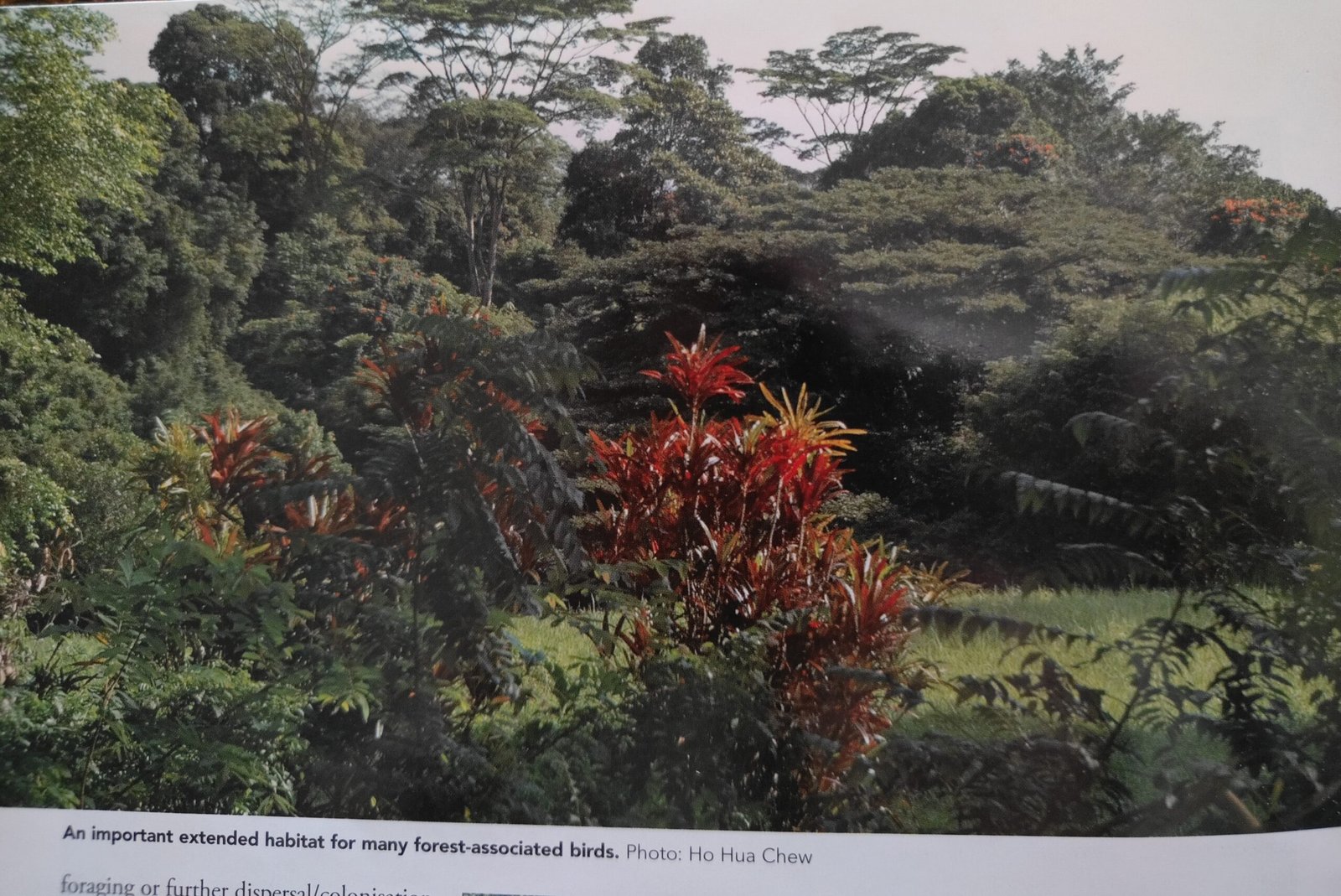
The carbon sink (photo : Ho Hua Chew)
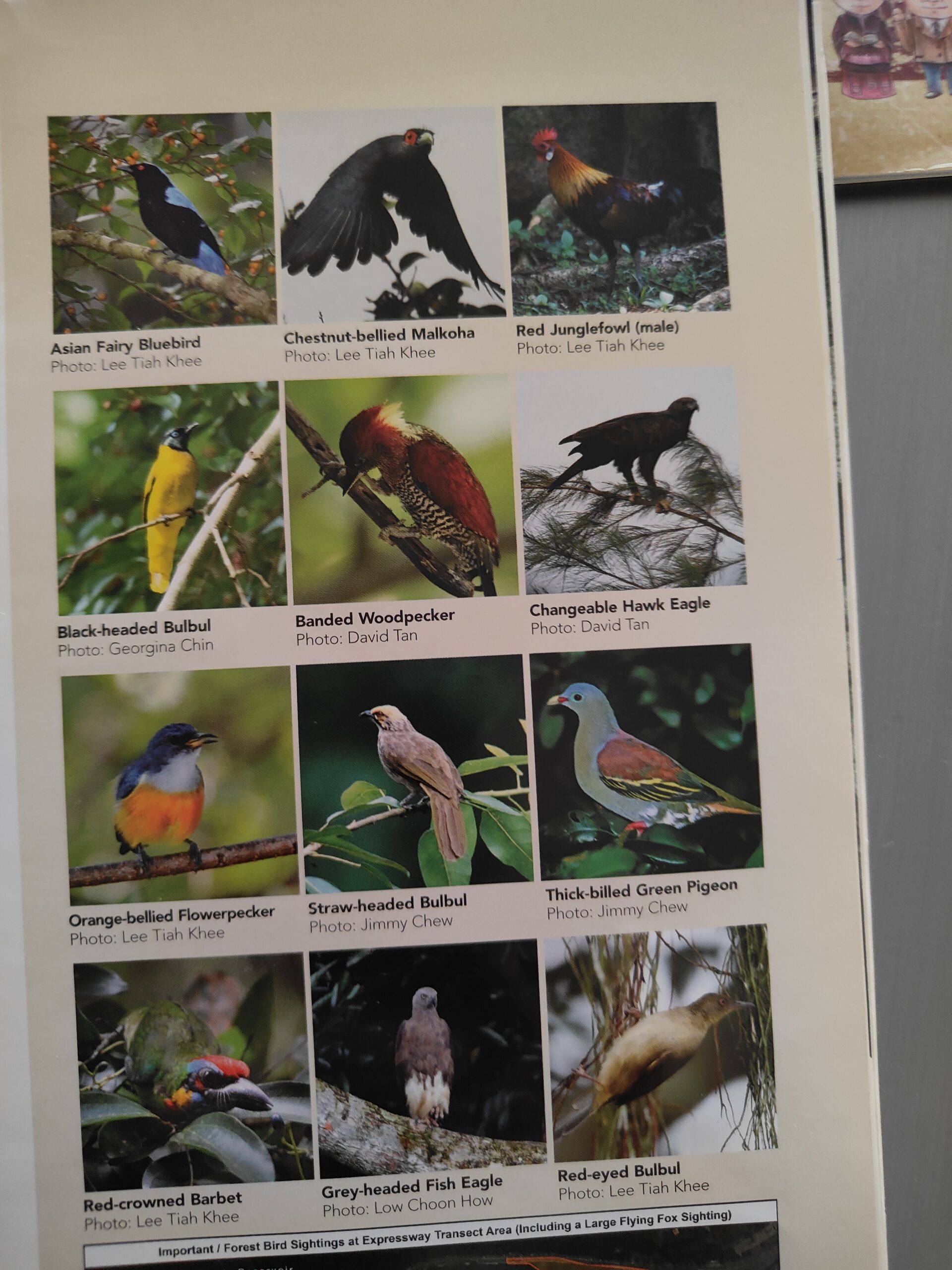
Birds of Bukit Brown (Nature Society of Singapore: Nature Watch)
Horse-riding and strolling, extracted from Nature Watch 2012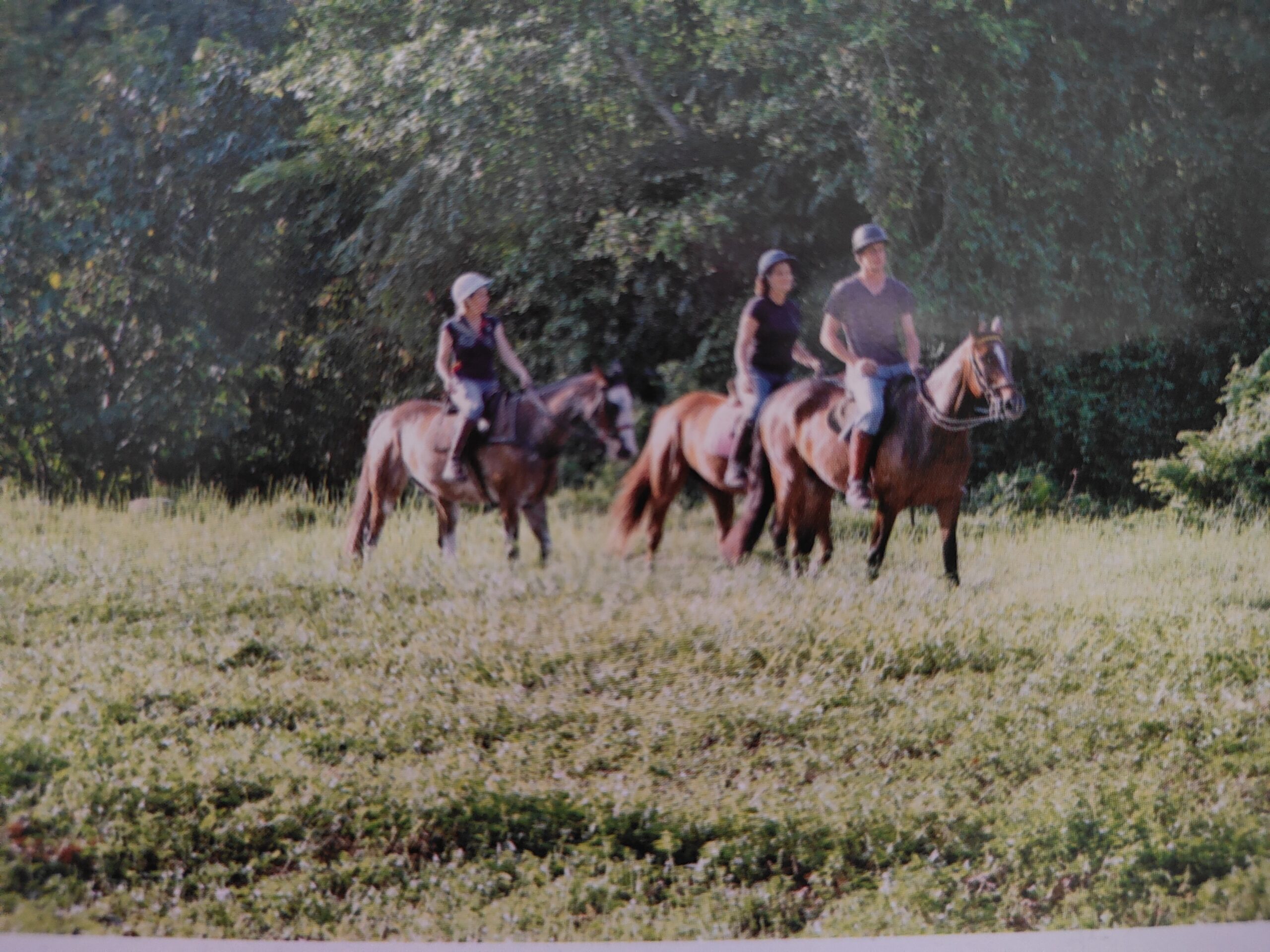
Intertwining Guided Walks of History, Habitat and Heritage
It’s like a three- in-one and atBB has recorded over 20,000 participants to such walks.
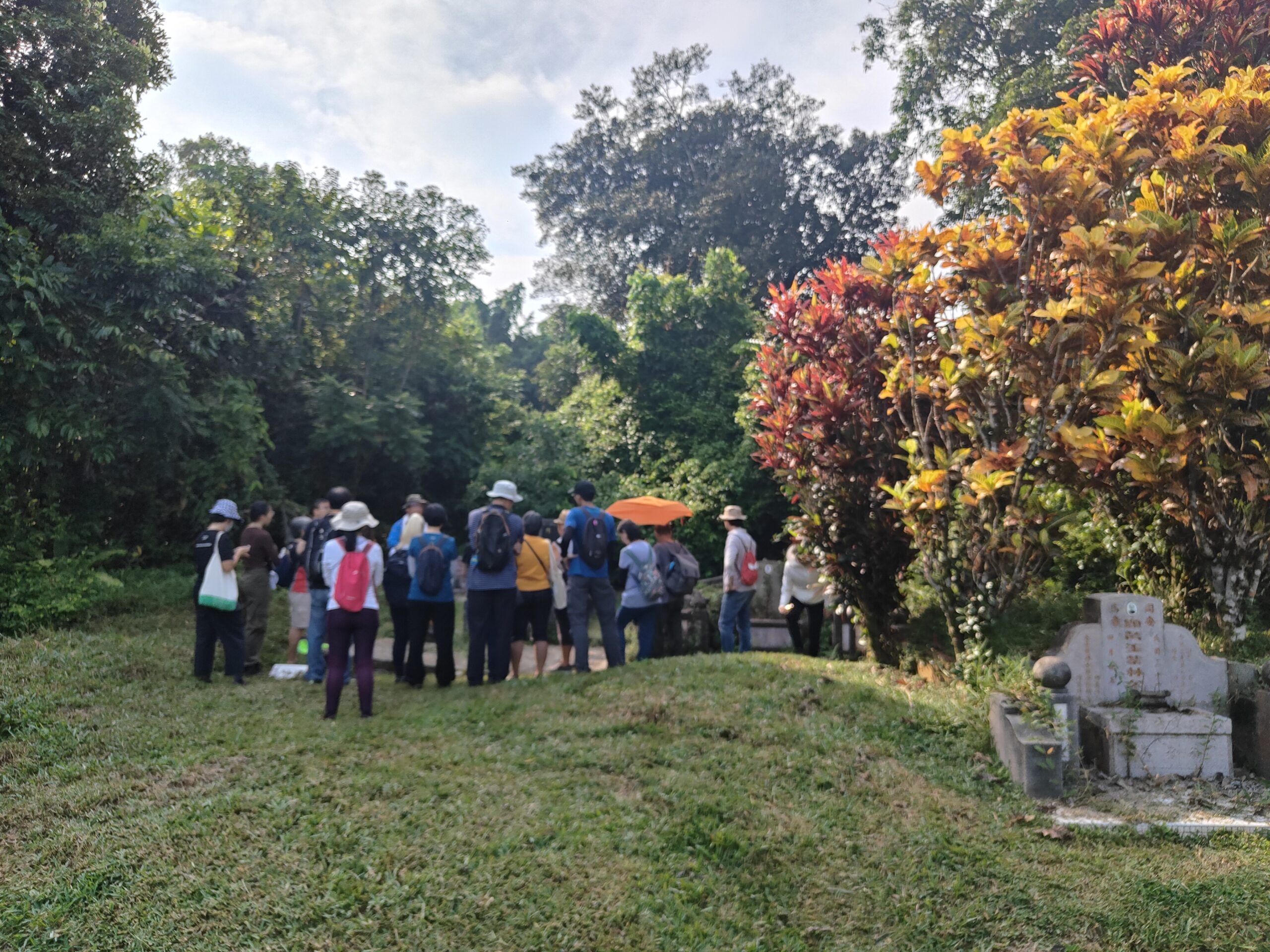
atBB guided walk at the grave of Tan Chor Nam
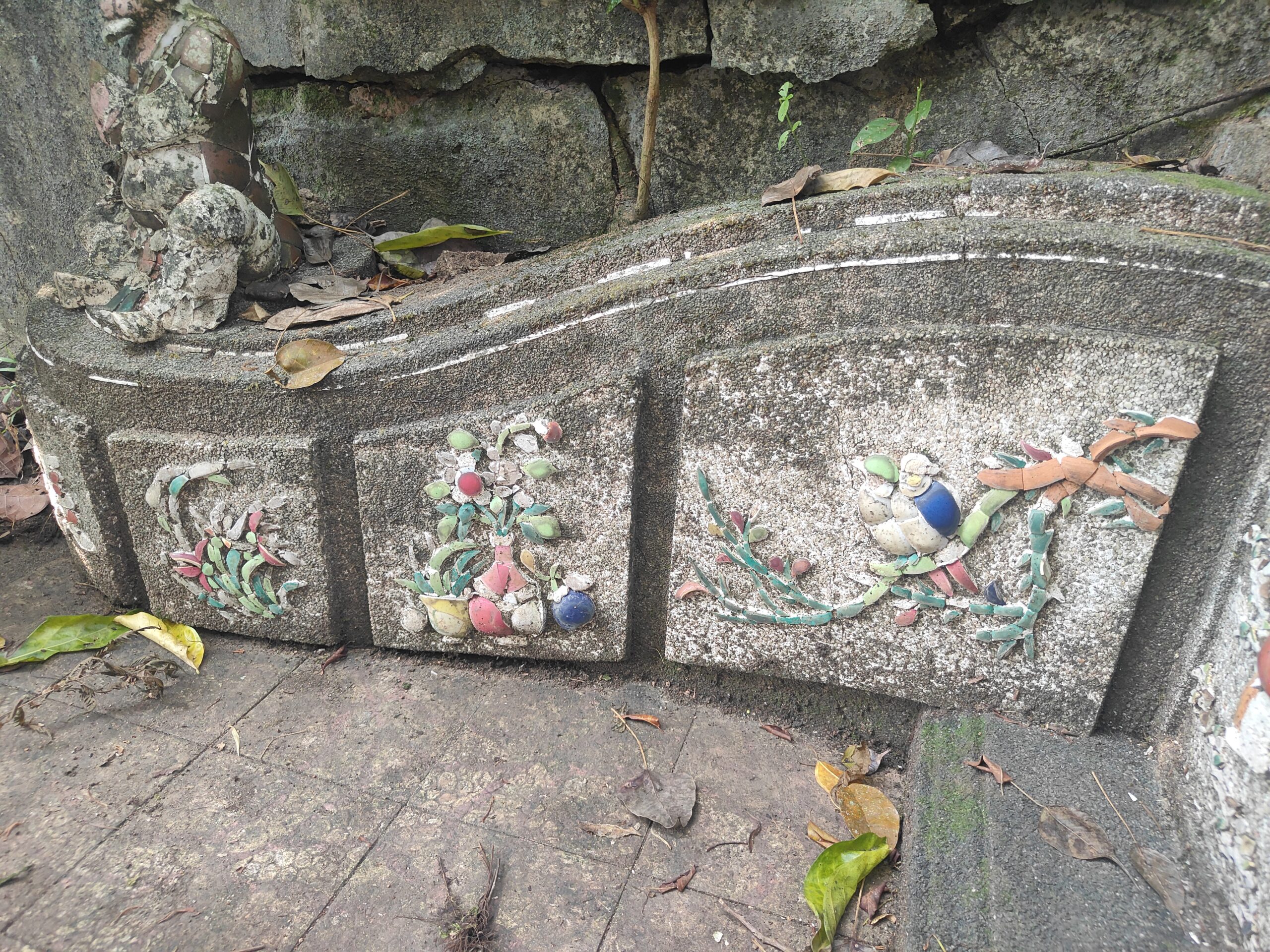
Five Cats Grave
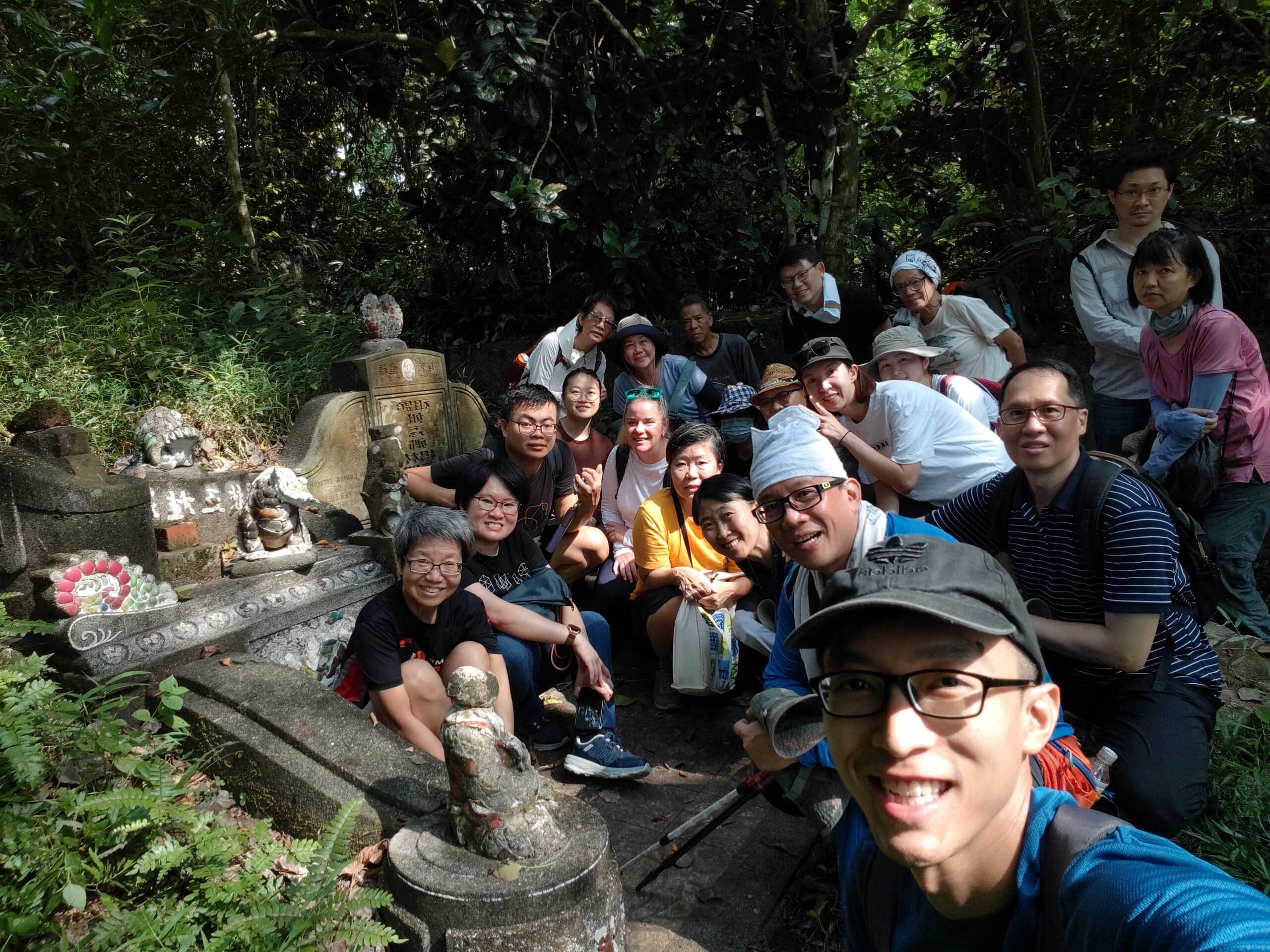
The group welfie by Kenneth of appreciative participants
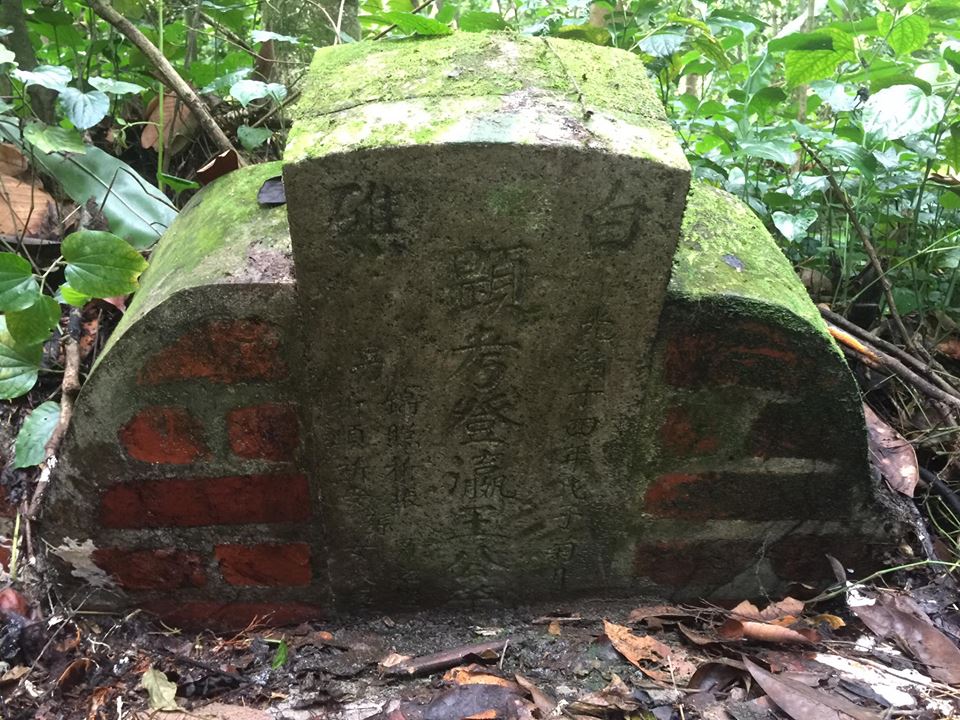
Simple grave from bricks, one of the earliest industries on the island
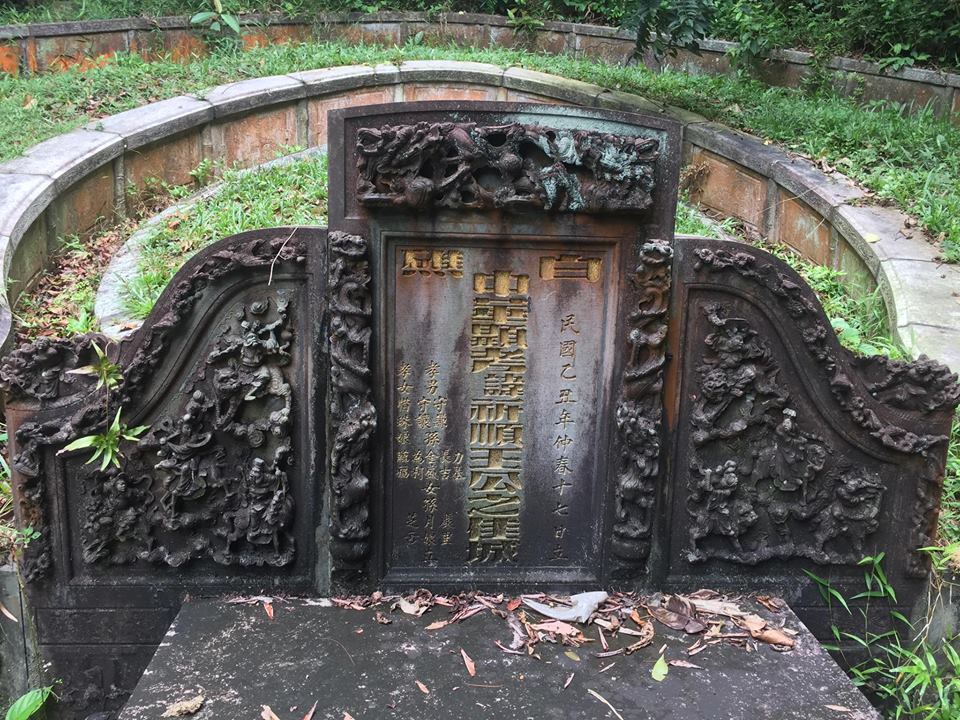
Elaborate 3-D grave
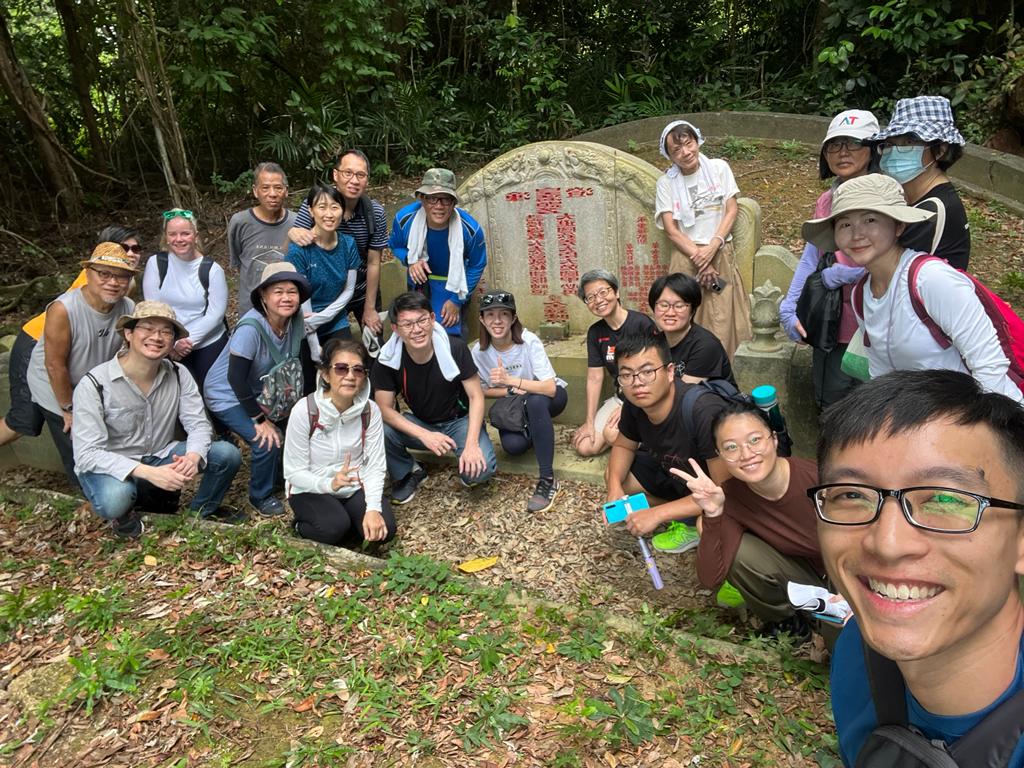
The grave of Tan Kim Ching. Kapitan Cina, Special Envoy in the Siamese court, scion of Tan Tock Seng
This blog post is extracted and adapted from a 2012 issue of Nature Watch. with thanks to the Nature Society of Singapore especially, Dr. Ho Hua Chew. Coming up “ The Spirit of Bukit Brown” by Ilsa Sharp.
by Catherine Lim
I was working on a production of History from the Hills – an 8 episode docu series which traces the history of Singapore from the perspective of Chinese pioneers who made significant contributions to society and the region in the late 1800s to the 1900s (post-war) and who are buried in Bukit Brown.
We were to shoot a sequence with Ong Chwee Imm – whose great great grandfather Ong Chong Chew was one of the three Ong “founders” of Seh Ong land – with Raymond Goh. A few weeks before, Chwee Imm had come across a document from among her father’s papers which recorded the graves of Ong Chong Chew together with 2 other family members exhumed from the Telok Blangah family burial ground, had been re-interred to Seh Ong Cemetery.
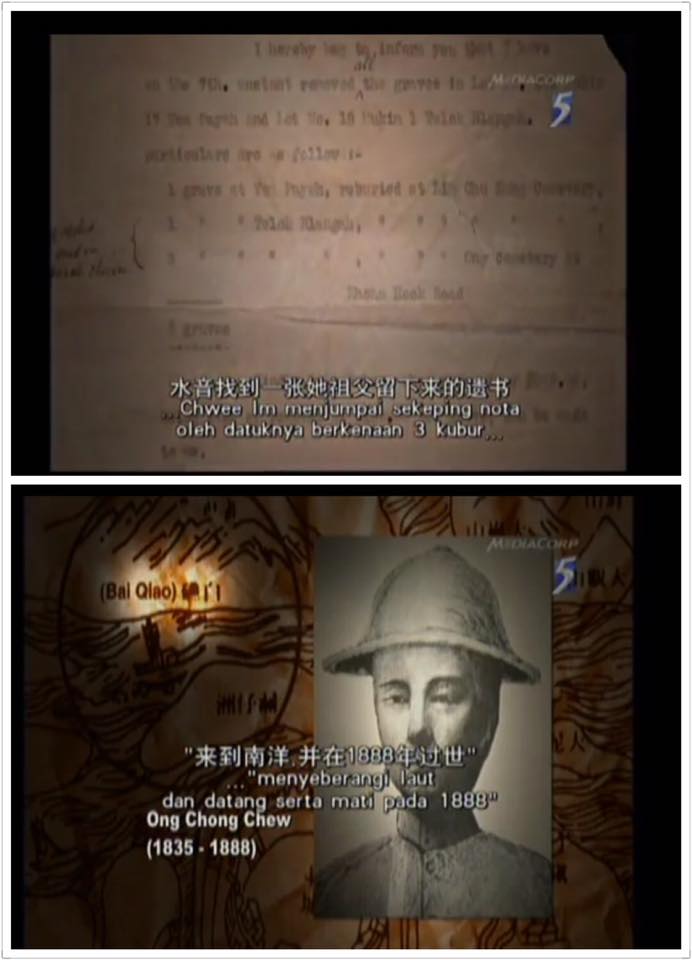
Screen grab from History from the Hills showing the document indicating reburial location.
Seh Ong cemetery also sliced into two parts because of the Lornie Road expressway straddled the expressway; alongside Sime Road adjoining the Bukit Brown Cemetery side and across where the golf course is. There was no indication which side the re-interred exhumed graves may have been relocated. However because extended family including that of Ong Chong Chew’s son Ong Kee Soon’s grave was located on the golf course side, the speculation was that the re-interred remains might be located there. It was a long shot which received an extra boost, when the night before the shoot, Chwee Imm’s brother mentioned that as a child he had accompanied their mother to visit some graves before the expressway was built, and so the mood on the morning of the shoot was palpable and brimming with anticipation.
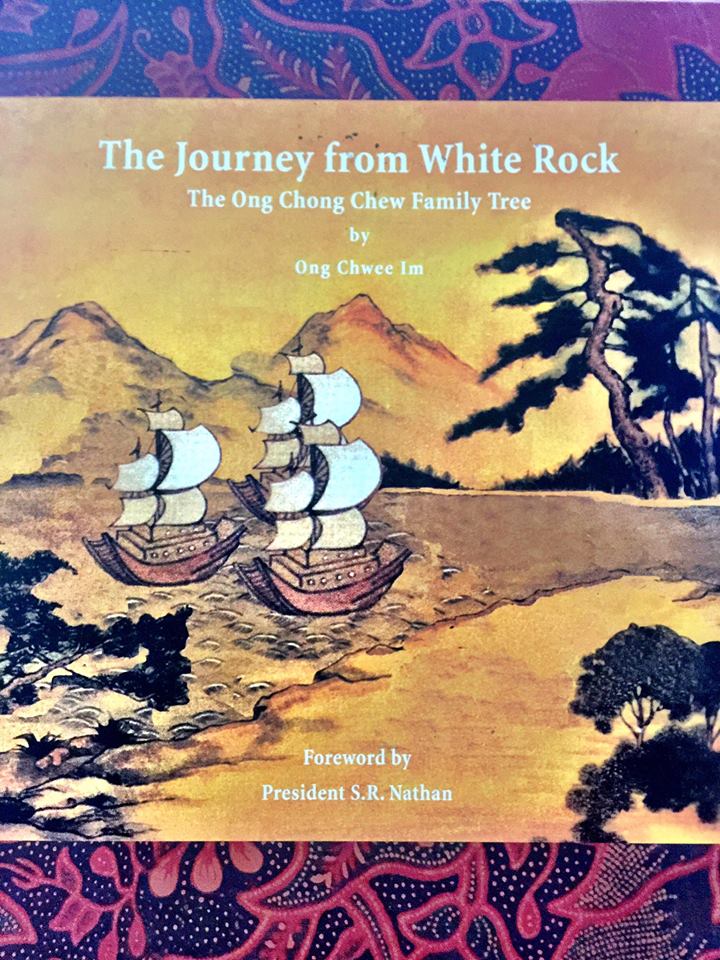
Chwee Imm had long wanted to find the grave of her illustrious ancestor ever since she had written and published ” The Journey from White Rock” (2006) tracing Ong Chong Chew’s life story and his legacy from his hometown in “White Rock” China to Singapore. It would be the final piece missing from her story.
Tomb of Ong Kee Soon, 2nd son of Ong Chong Chew and from whose line Chwee Imm is descended at Seh Ong ( photo Raymond Goh)
The search was undertaken around the area where Ong Kee Soon’s grave was located. It was “bush bashing” terrain and after an hour into shoot when Chwee Imm fell into a depression in the ground, it was decided that the search would be abandoned for safety reasons.
Fast forward, Saturday 17 September, 2016. Raymond Goh on his usual solitary weekend explorations and research in the vicinity of what remains of Seh Ong bordering Bukit Brown, suddenly decided to look down and this was what he saw:
Tomb of re-interred remains of Ong Chong Chew (photo Raymond Goh)

Tomb of Ong Kim Cheow, eldest son of Ong Chong Chew (photo Raymond Goh)
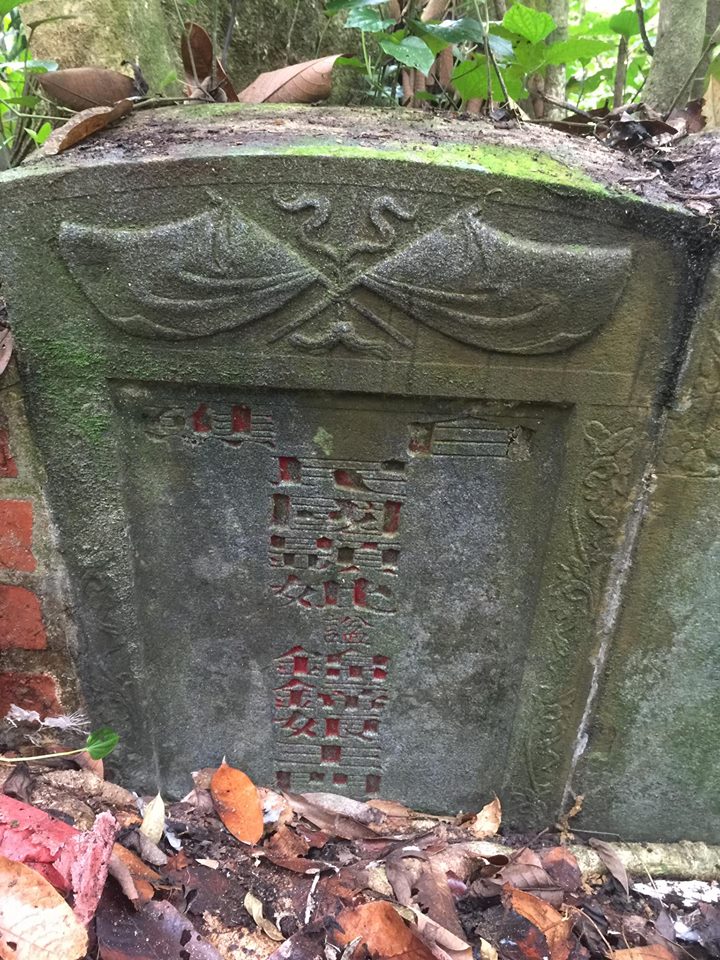
Tan Tay Neo – posthumous name indicated on tomb- Ong Kim Cheow’s wife (photo Raymond Goh)
Here are some notes from Raymond’s post on the FB Heritage Singapore Bukit Brown :
“Rediscovery of Ong Chong Chew, his eldest son Ong Kim Cheow and Kim Cheow’s wife in Seh Ong cemetery. Chong Chew’s tomb was a remake when he was re-interred from his family burial ground in Telok Blangah to Seh Ong. Date on tomb -1888. All his children inscribed on tomb matched the records. Kim Cheow was a founding member of Straits Chinese Recreation club and died in 1909, hence his tomb still indicated Qing era, his daughter married Tan Hay Leng, son of Tan Kim Ching”
(The original document from Chwee Imm’s papers had indicated 3 family members including Ong Chong Chew)
Ong Chong Chew also contributed to Chong Wen Ge, Heng San Teng and Sian Cho Keong 仙祖宮(Amoy St)
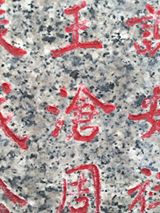
Ong Chong Chew’s name on a stele at Chong Wen Ge (photo Victor Lim)

Raymond Goh offering prayers at a shrine in the vicinity just before he chanced upon the Ong Chong Chew cluster of 3 tombs
At the time of the rediscovery of Ong Chong Chew’s tomb, Chwee Imm was abroad and relatives on FB helped to contact her to inform her.
We look forward to hearing more from her when she has had a chance to visit. But there is no doubt, that given the dedication which was written to her august ancestor in her book, the finding of the tomb marks another important milestone in her journey to White Rock.
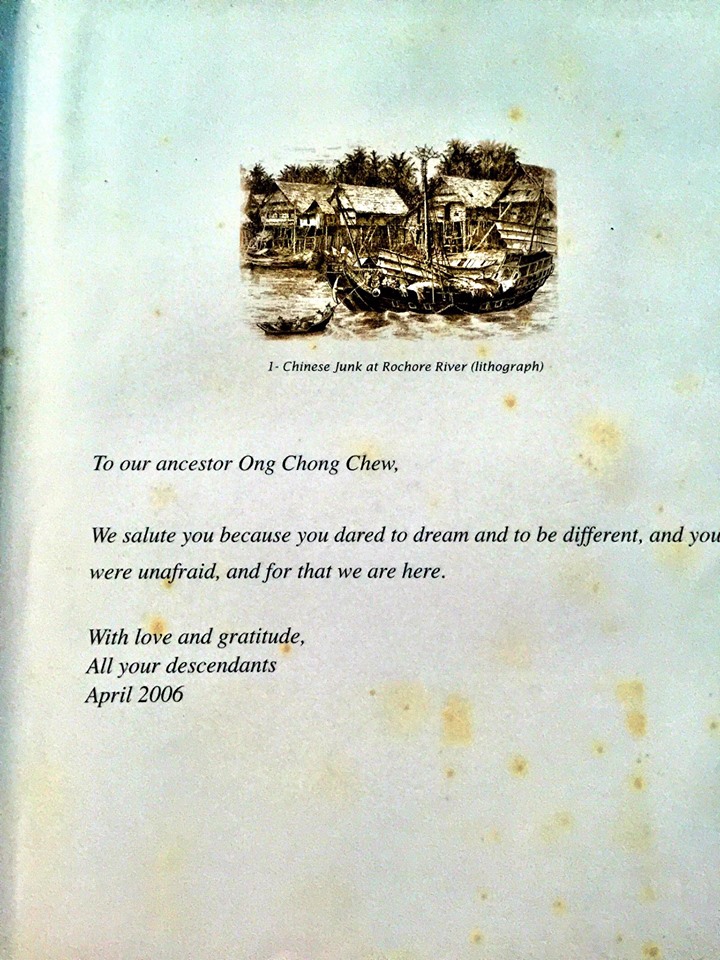
Dedication to Ong Chong Chew in the book “The Journey from White Rock” by Ong Chwee Imm
For those who are interested in the first episode of History from the Hills which featured the history of Seh Ong land and the initial search for Ong Chong Chew :
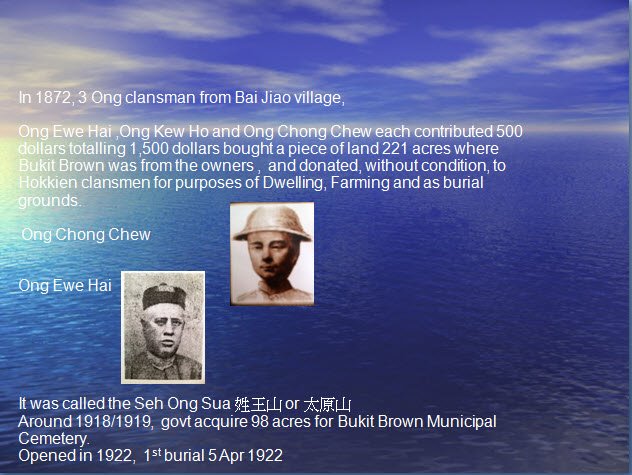
A background of the 3 Ongs from Raymond Goh. Not pictured in slide is the third Ong, Ong Kew Ho.
More on the founders of Seh Ong here
![Bianca guiding the Botanic Garden to Bukit Brown walk [photo: Theresa Teng]](http://bukitbrown.com/main/wp-content/uploads/2016/08/bianca-guiding-photo-by-Theresa-Teng.jpg)
Bianca guiding the Botanic Garden to Bukit Brown walk [photo: Theresa Teng]
She first visited Bukit Brown in early 2012 and came on a few guided walks conducted by the Brownies before naturally falling in step with the volunteers and started conducting guided walks in 2013. She has co curated a few themed walks such as the poetry walk, Botanic Gardens to Bukit Brown for Jane’s Walks, meet-up groups and always is among the first to volunteer when we get private requests including from the Peoples Association and constituency community grassroots groups who are caught by surprise not only that their volunteer is foreign but also speaks Mandarin!
Bianca traveled out of her birthplace Holland to the region when she was in her late twenties and she worked in Malaysia & China for a few years before finally ending up in Singapore where she has lived and worked for 16 years now. She knows more about Singapore’s heritage places and history than the average Singaporean and has embraced our cultural traditions, even demonstrating how to cook nasi ulam at the Baba House Museum.
![Bianca doing a nasi ulam demo performance at Baba House [photo: Jennifer Teo]](http://bukitbrown.com/main/wp-content/uploads/2016/08/bianca-nasi-ulam-photo-Jennifer-Teo.jpg)
Bianca doing a nasi ulam demo performance at Baba House [photo: Jennifer Teo]
Here is her appearance “live” when she was interviewed in the studio after the crew tagged her on a few visits all over Singapore.
http://www.channel8news.sg/news8/ca/hellosingapore/episodes/20160823-hs-high2/3066160.html
So the next time you come on a guided walk and Bianca is your guide, you can test her Mandarin! She also speaks Dutch (of course), French, German, Swedish, and gets by in understanding Latin languages.
Information on public walks in Bukit Brown can be found by following Bukit Brown Events on Peatix : http://peatix.com/user/617188/
=======
Footnote: Bukit Brown Cemetery is commonly known to the Chinese as Kopi Sua.

Screen capture of Bianca in the CH8 video at Bukit Brown
![Bianca guiding at Bukit Brown [photo: Theresa Teng]](http://bukitbrown.com/main/wp-content/uploads/2016/08/bianca-guiding-photo-by-Theresa-Teng2.jpg)
Bianca guiding at Bukit Brown [photo: Theresa Teng]
In 2009, the Coopers arrived in Singapore from the UK. Jon’s wife had a job posting here and Jon was to be during the duration of her posting, a house husband taking care of their 2 young children and running the household. As luck would have it, on the morning after they moved into their home, Jon on a “reconnaissance” of his new neighbourhood spotted a National Heritage Board marker introducing the WWII history of Adam Park.
From that day onwards, Jon’s life took on a different direction. Trained as a battlefield archeologist, he was to spend the next 9 years, juggling his responsibilities as husband and father with his passion for battlefield history, Singapore after all is rich and fertile ground for the “digging up” of WW II history.
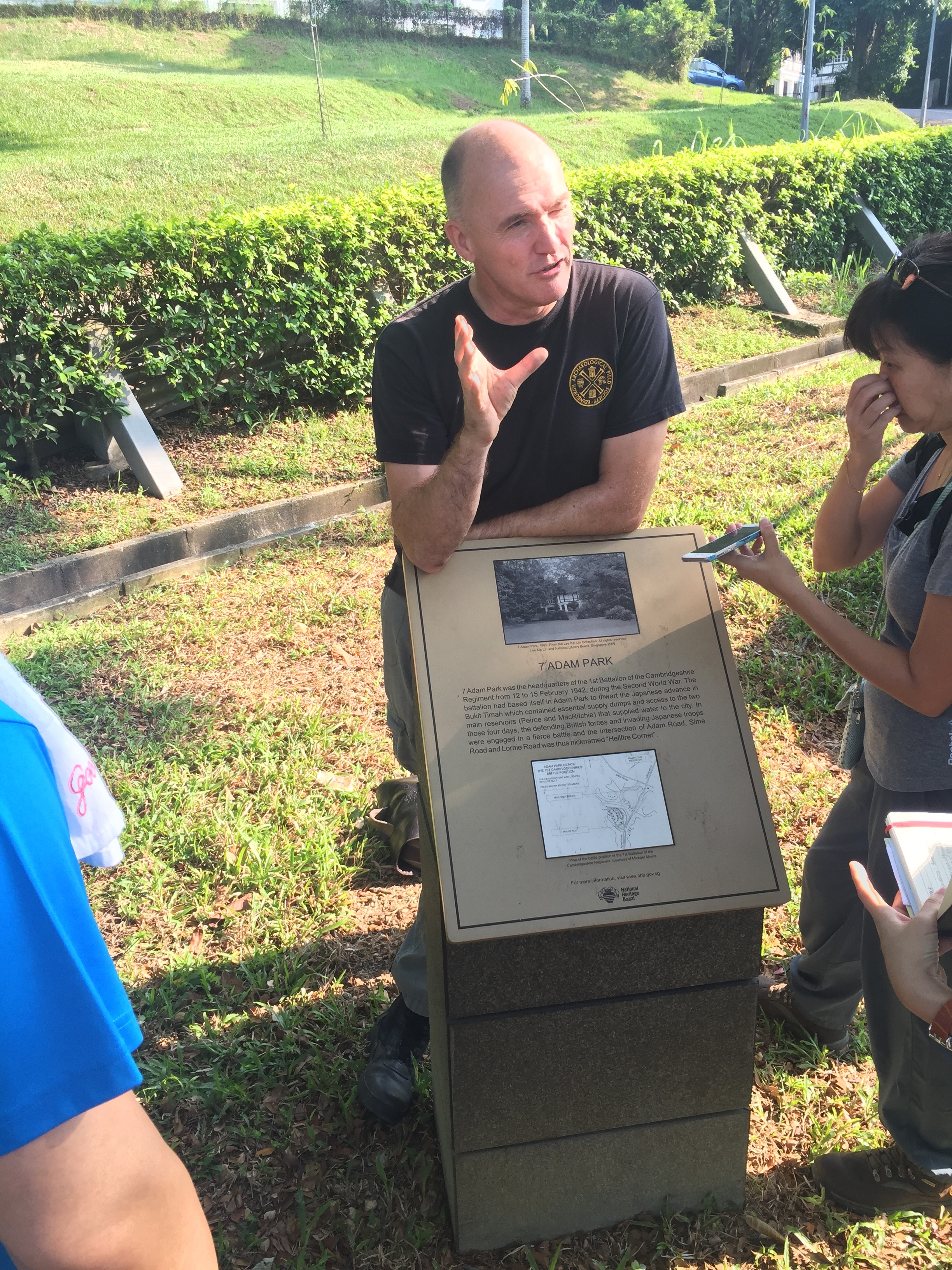
Jon Cooper and the NHB marker about Adam Park. The marker had been refurbished and revised by NHB recently (photo by Simone Lee)
Jon and his family moved back home to Scotland in July this year. In the time Jon was here, his contributions to WW II history included the regular once a month “Battle at Cemetery Hill” guided walks for All Things Bukit Brown which started in June 2012, an exhibition co-curated by Jon under Singapore Heritage Society held at National Library in commemoration of the 70th Anniversary in 2012 of the Fall of Singapore –Four Days in February: Adam Park the Last Battle- over 20 archeological digs as part of The Adam Park Project (TAPP) capping it all by the publication of Tigers in the Park. Published just weeks before he left for home, Simone Lee attended the last of the Tigers in the Park tours held in conjunction with the book’s launch.
=========
Jon Coopers Adam Park Project by Simone Lee
Adam Park is a significant place in Singapore’s history because it was where one of the last and fiercest battles was fought and was subsequently a prisoner of war (POW) work camp.

Along Adam Road (photo by Simone Lee)
Located at the crossroads between Bukit Timah and MacRitchie Reservoir, Bukit Timah is the highest point in Singapore and where the British army supplies were kept. The Japanese captured Bukit Timah on 12th February 1942 and set its sights on cutting off the water supply to the city. The British troops guarding the Water Tower along MacRitchie Reservoir were ordered to move the defence line outward towards Bukit Timah, and engaged in battle with the Japanese troops at the halfway point which was Adam Park.
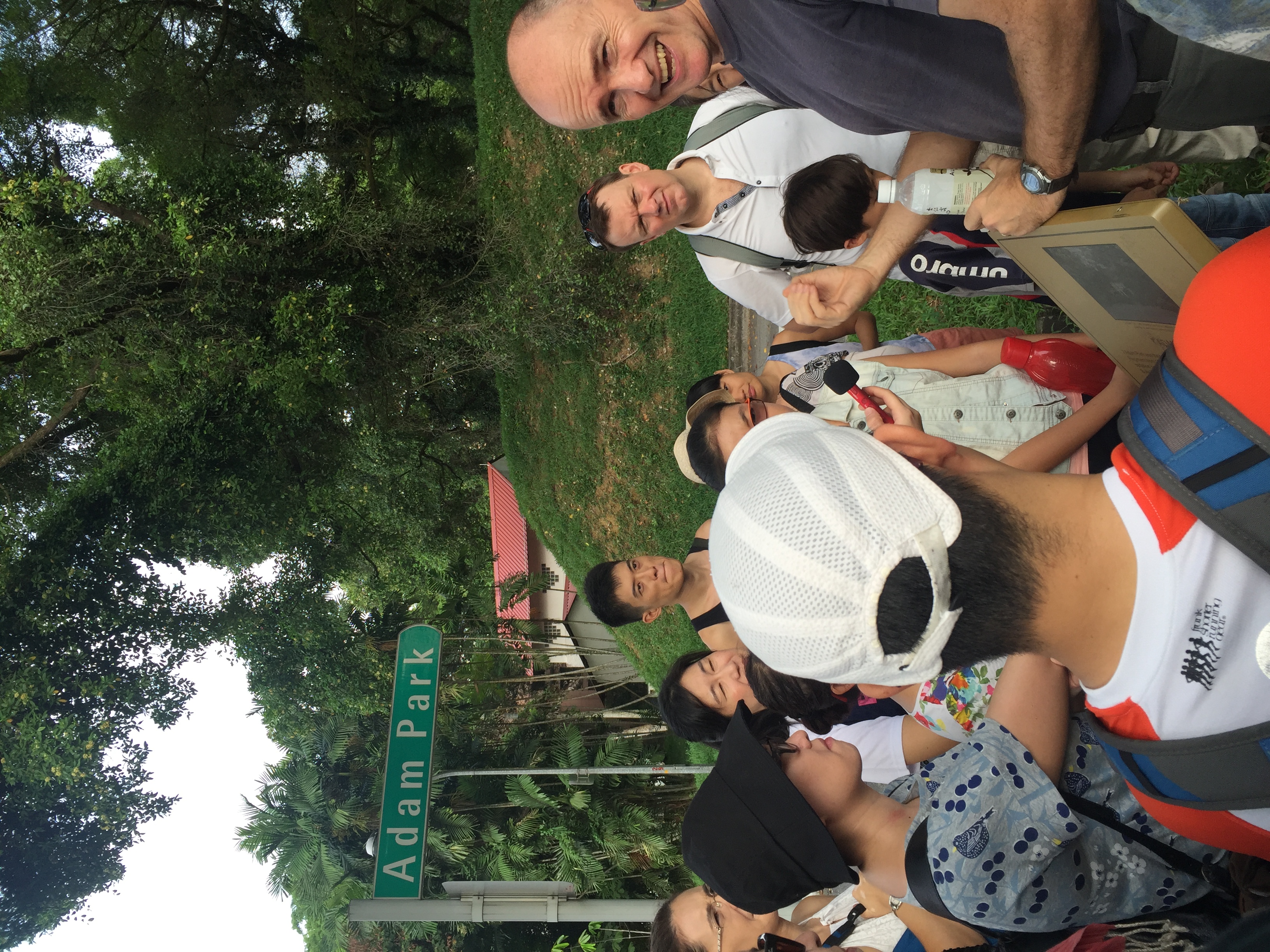
Engagement with participants from the start at Tigers in the Park (photo by Simone Lee)
At Adam Park, Jon sets up the battlefield of engagement and from his research which includes oral interviews with war veterans, former residents of Adam Park, descendants and pouring over diaries and other private papers, Jon brings to life compelling stories of the people at Adam Park, igniting an important component of WW II , its social history.
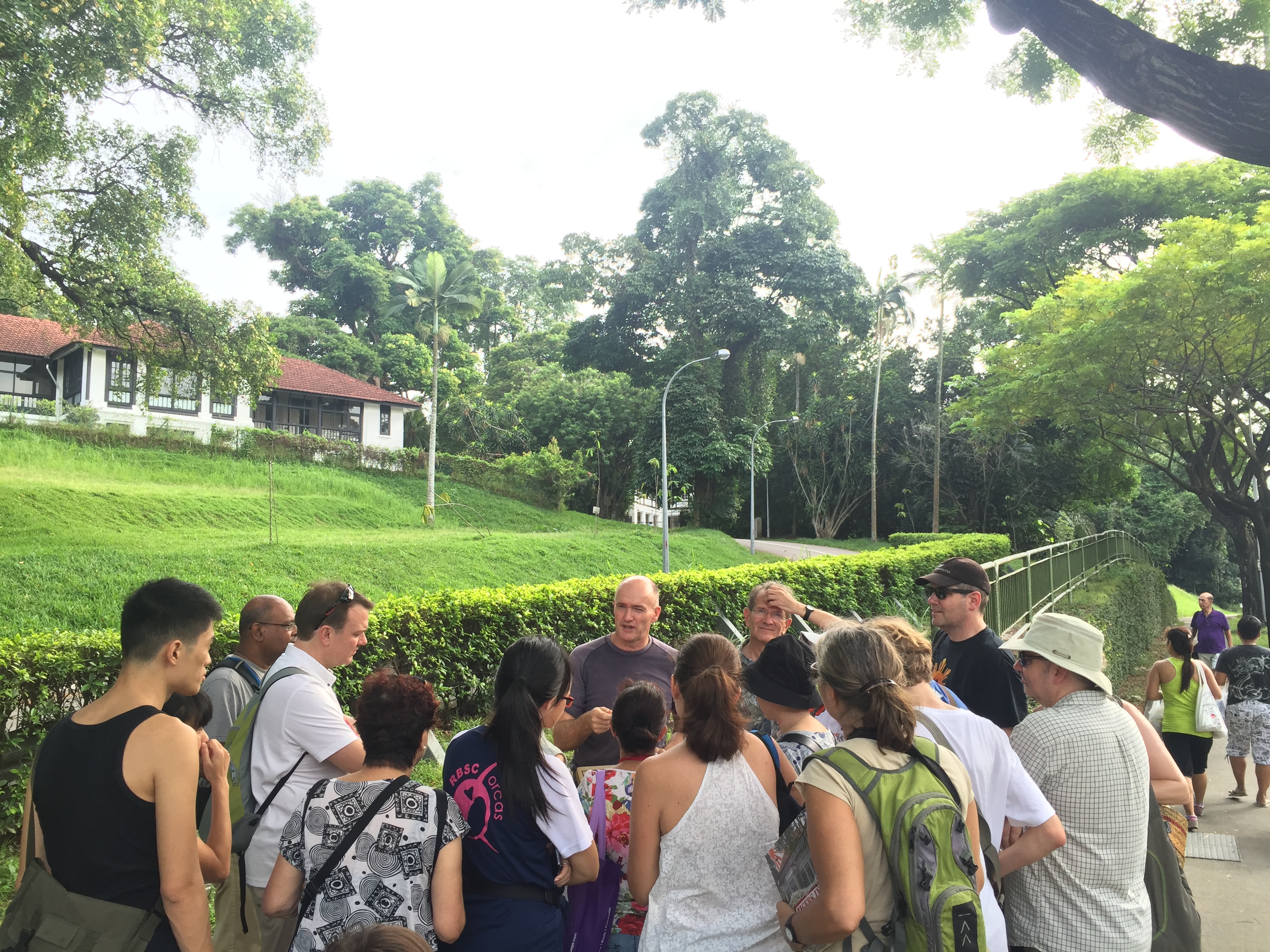
An introduction to Adam Park estate before going up the hill (photo by Simone Lee)
The colonial black-and-white bungalows at Adam Park were built in 1929 for the European community. Generous lawns allowed for tennis courts and putting greens. The driveways had space for cars owned by residents and their guests. It is a beautiful, genteel estate away from the city and conveniently located close to the golf course which now belongs to the Singapore Island Country. Here are some highlights of the various houses with significant stories to tell in the book.
House No.16
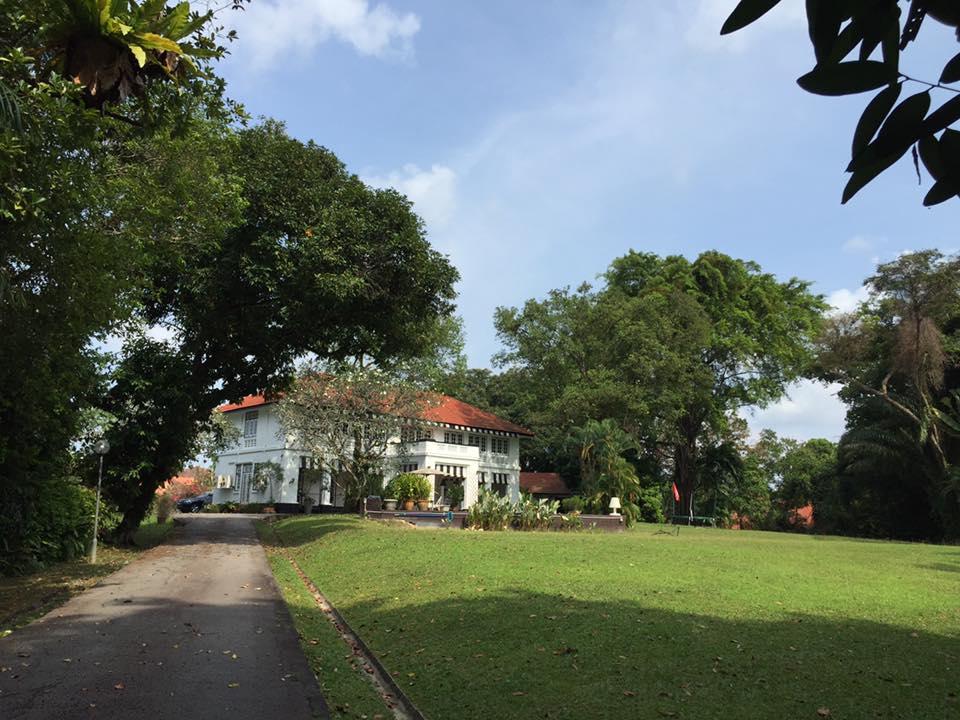
The biggest house on the estate, No.16 (photo by Bianca Polak)
Located on top of the hill, and dubbed ‘Bachelor’s Mess’ during the war, the first family to occupy house was the Dutch Consular General, Mr.Hendrik Fein, his wife and their “celebrity” daughter, Concha. They lived there for a few months in 1938 before moving to Mount Alma. Concha was reputed to be a great beauty, young and vivacious who became popular for helping the Singapore Charity Cabaret and regularly entertained the Allied troops. Unfortunately, Concha and her family were in the plane which went missing on its way to Australia when they were evacuated at the onset of war. Their plane was one of 2 carrying passengers from Java. The other plane landed safely in Melbourne with one of its passengers being Lieutenant General Gordon Bennett, who relinquished his post as the Commander of the Australian Army’s 8th Division in Singapore to escape being captured by the Japanese when it fell.
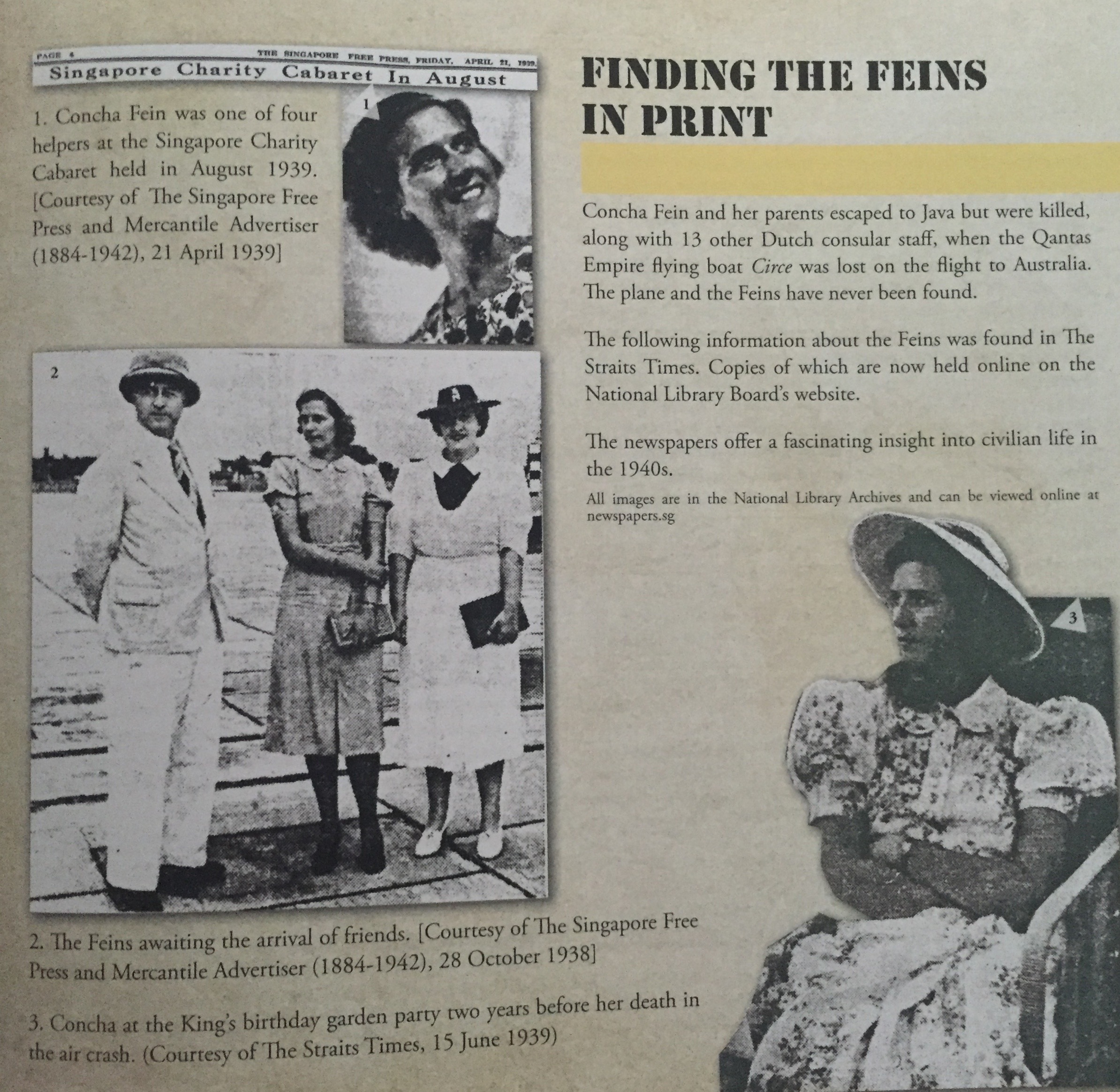
Photos of Concha and her family in Tigers in the Park
The Seefelds moved into No.16 after the Feins’. They had escaped Hitler’s persecution of Jews in Germany to England and then joined their sons in Singapore in 1939. Seefeld Snr continued his practice as a dentist here, but when WW II arrived on our shores, his family were rounded up along with other Germans and deported. Leaving in haste, the family left all their belongings, including a complete set of what was considered high-end dental equipment then and, furniture that he had brought with him from Germany. The dental set was later used by the Japanese military during their occupation. To the Seefeld familys’ astonishment, the entire set was then shipped to them in Australia, intact, shortly after the war ended.
While the city was being bombarded with daily air raids which began in December 1941, the Adam Park estate was barely touched by the bombings. No.16 became home to the Morrisons after the Seefelds and a few other families had also taken refuge in the house after homes in the city were destroyed. It was a short lived refuge. On 31st January 1942, the Morrisons left their home to board a ship out of Singapore. Their ship, the Empress of Japan had docked 2 days earlier carrying British soldiers from the 18th Division. The Empress left Singapore with civilians escaping the war, and by the time it arrived at Liverpool, it had a new name, the Empress of Scotland.
As the city was besieged, allied troops retreated to Adam Park. House No.16 saw action in the battle between the 1st Battalion Cambridgeshires and the 41st Regiments of the Imperial Japanese Army at Adam Park on 13 February 1942, 2 days before the British was to surrender Singapore.
House No.12
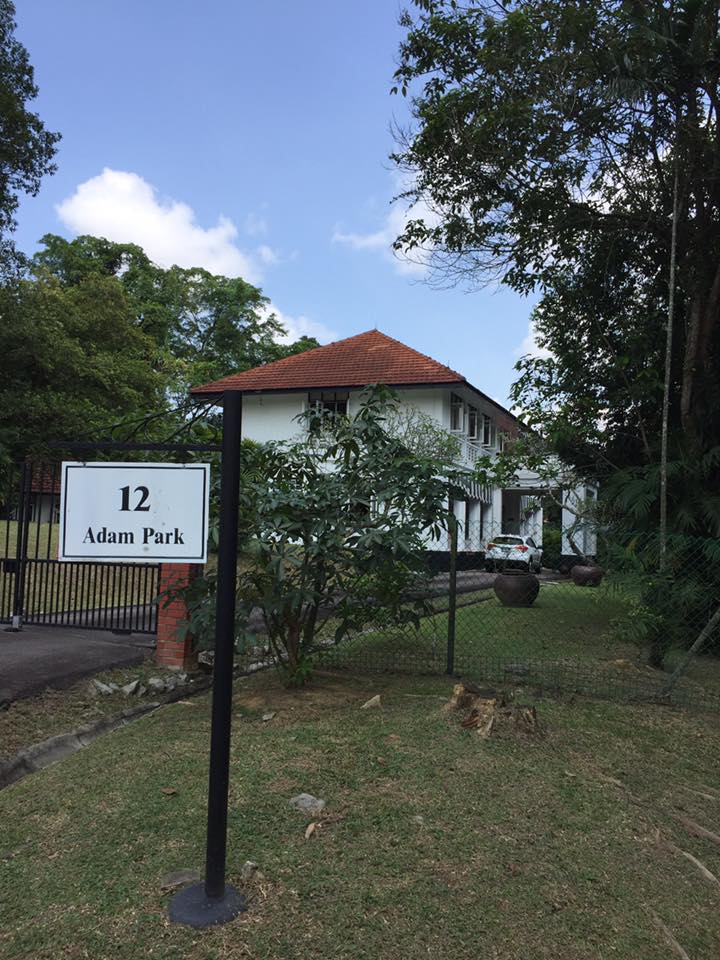
House No.12 (photo by Bianca Polak)
Despite being one of the last residents to evacuate the estate, Philip Cooper Sands returned to his home at No.12 each day during the battle at Adam Park and gave vivid accounts of the bombardments surrounding the house in his diary, and letters to his wife who had left on the same ship the Morrisons were on.
Read more about their stories in ‘The Residents of Adam Park’ page 33 of ‘Tigers in the Park’.
House No.20

With some imagination, we could assume that the patches on the walls of house no.20 may have been battle scars from the mortars fired to drive the Japanese soldiers out of the house (photo by Simone Lee)
A few metres down the hill from house No.16, a triple coil Dannert barbed wire fence had been erected in front of house No.20. While about 100 men from the 1st Battalion’s D Company held on at houses No.13 and 14, C Company joined them late in the night on 13th February and set their positions at the remaining houses surrounding the defense line. To their dismay, they woke the next morning to find some 23 Japanese soldiers in house No.20. Apart from being exhausted from combat at MacRitchie the day before, the men at C Company were not aware that D Company had shifted their positions and unknowingly left house No.20 empty. A battle ensued between the new “neighbours”
Read more about the battle at house No.20, and how Corporal Pearson and Lieutenant Clift earned their medals from this battle in ‘Adam Park: HQ, C and D Companies, 1st Battalion Cambridgeshires Regiment’ and ‘The West End of Adam Park Estate: C and D Company, 1st Battalion Cambridgeshires Regiment’ from page 140 of ‘Tigers in the Park’.
House No.17 – Regimental Aid Post (RAP)

The Regimental Aid Post, House No.17. Injured soldiers sprawled onto the lawn after evacuating the house when it caught fire (photo by Simone Lee)
Red Cross banners hung from the windows of house No.17 which became the Regimental Aid Post (RAP) for the 1st Battalion. It was the first medic point for injured soldiers before being transferred to a hospital in the city. By 15th February, the RAP was overwhelmed with Cambridgeshire casualties. The medics were working quickly to attend to every injured soldier brought in while some of those wounded but could still walk, helped out. Six medical ambulances had arrived that morning bringing some relief. But before they could be loaded and sent back to hospitals in the city, the vehicles were blown up, and the RAP was ruined. A British soldier had fired at a Japanese tank that was collecting their own wounded and in retaliation, the Japanese shot back. Rounds of bullets from their machine guns and tanks pierced through the walls of the house and the fuel tanks of the ambulances, setting them on fire. Everyone in the house scrambled out to the garden. Unbeknown to both sides, a ceasefire had already been called and received at No.7 to prepare for surrender.
Read Sergeant Len Baynes and Lance Corporal Cosford’s account of the attack on the RAP in ‘The Final Act’, page 191 of ‘Tigers in the Park’.
House No.7

House No.7 (photo by Bianca Polak)
House No.7 sits at the bottom of the hill on the eastern end of Adam Park along Adam Road. It was thought since it was located on the reverse slope, away from sight of the Japanese troops at Bukit Timah hill, No. 7 was most strategic to house the battalion’s headquarters. The battalion held up at the estate for 3 days of battle. However, by the end of the fighting, the Japanese troops had managed to infiltrate the surrounding areas. The house was then in full view of the enemies and bombarded by Japanese artillery.
On the afternoon of 15th February, Lieutenant Colonel Carpenter who was in charge of the 1st Battalion sent a message to the 54th Infantry Brigade headquarters to explain about their dire situation and asked permission to move the battalion away from Adam Park. Minutes later, the message of the surrender arrived. It took Carpenter a few moments for the message to sink in before sending out the order to cease fire. It took more than an hour for the message to reach the units at the other end of the estate.
While the Cambridgeshires were stricken with the shame of defeat, General Arthur Percival was negotiating the terms of surrender with Lieutenant General Tomoyuki Yamashita at the Old Ford Factory.
Read ‘The Final Act’ from page 191 of ‘Tigers in the Park’.
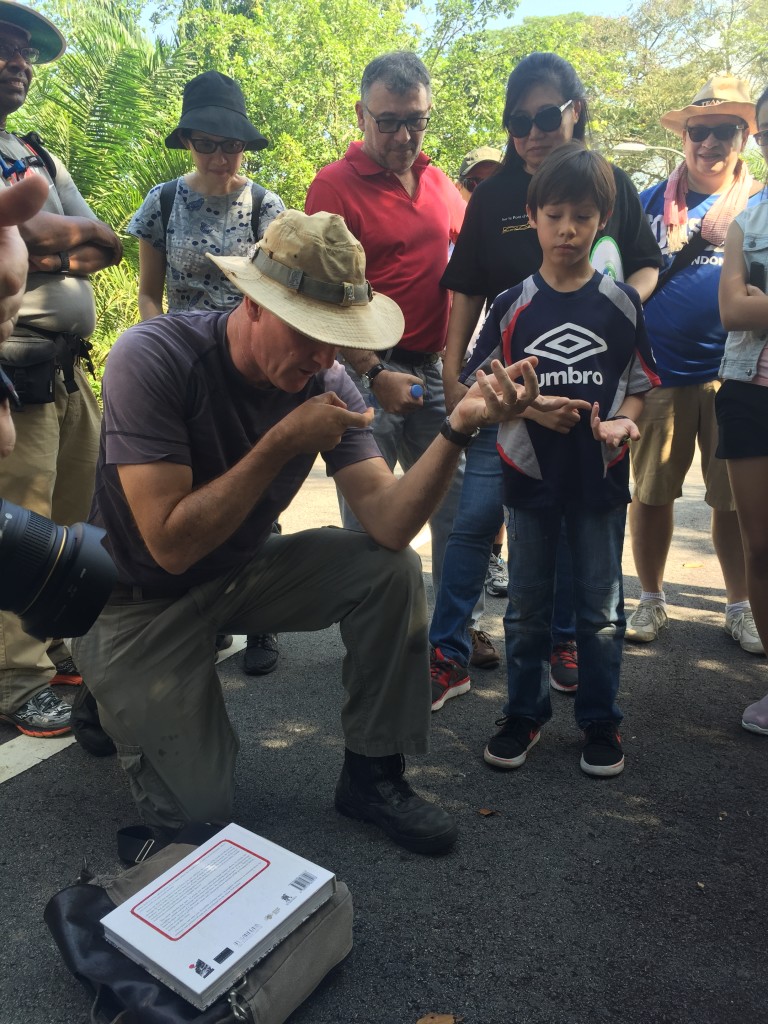
Jon reenacting a scene from the battle (photo by Simone)
The Aftermath
The day after the surrender, the surviving Cambridgeshires were packed onto a tennis court at one of the houses. They dug a single latrine at the corner of the court. The stench from it, drove the Japanese soldiers farther away as days went by and the latrine trench overflowed when it rained. On 19th February, a week after the Cambridgeshires had arrived in Singapore, they marched to Changi Prison to join the rest of the POWs.
A month later, the fittest POWs were moved to Adam Park. It became a working camp for some 2000 Australian and 1000 British POWs from March 1942 to January 1943. They were chosen to help build a Shinto shrine at MacRitchie Reservoir. But the first thing they had to do was to repair the war torn estate and settle in. They organized the estate into barracks and life at the Adam Park camp was comfortable compared to Changi Prison camp. They got the electricity, even air conditioning and water heaters working and enjoyed proper sanitary and ventilation. They picked up some Japanese language from chatting with the guards. Work was not considered too hard and hours were not too long. It was no holiday camp but they were provided with ample rice to cook and bought bread rolls and sweets from the canteen at house No.11 with the little money they were paid from the ‘Shrine Job’. And because the camp was not fenced up, some of the men would sneak out after the lights are out at 10pm to trade in the city for other sources of food.
Read ‘Settling In’, the ‘Shrine Job’ and ‘Trade’ from page 230 onwards of ‘Tigers in the Park’.
House No.11 – The Prison Chapel
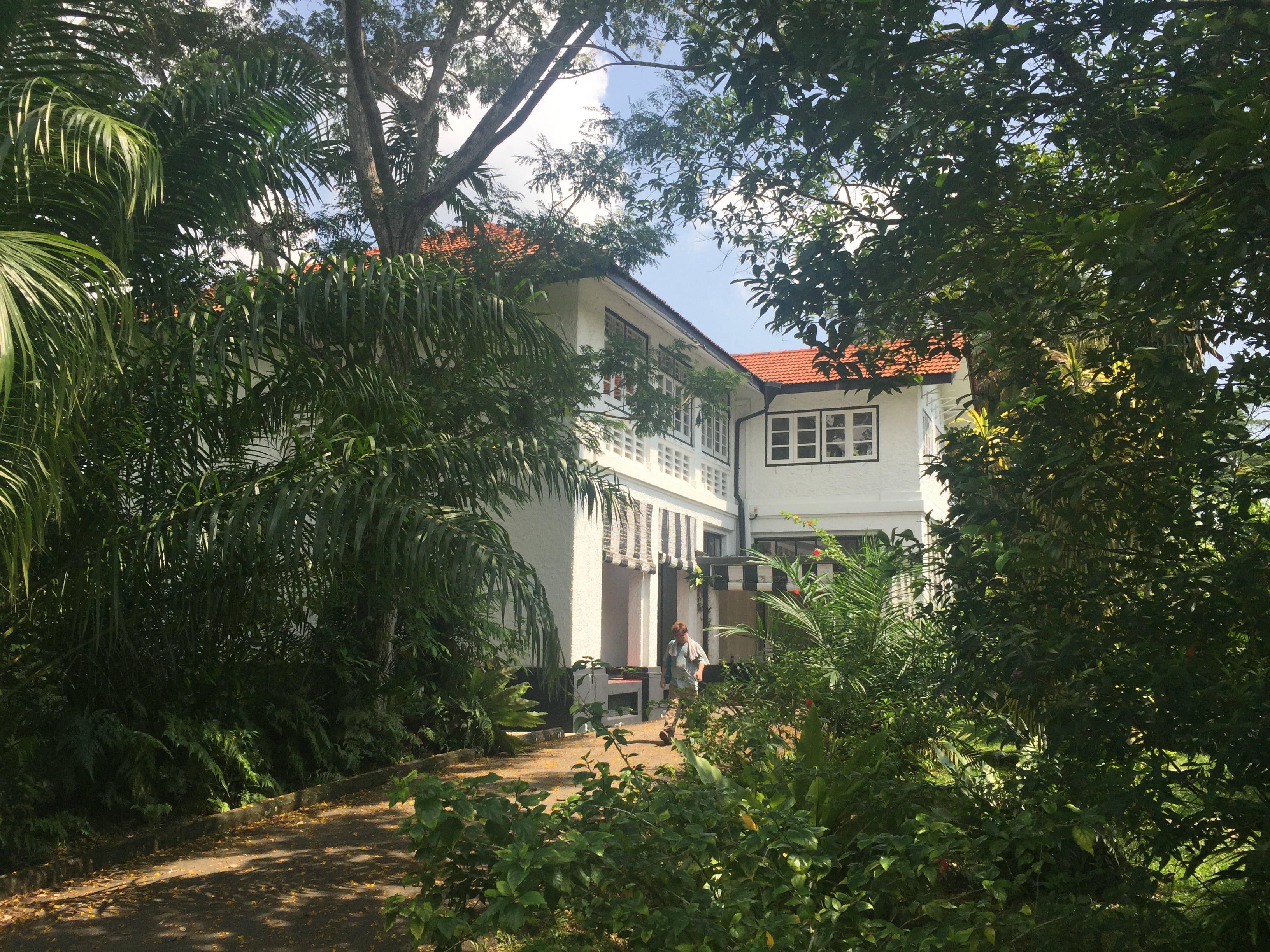
House No.11 (photo by Simone Lee)
One of the major facilities set up by the POWs was the “mess hall” which also housed a chapel. It was the second POW chapel remaining in Singapore, the first being the St Luke’s Chapel in Roberts Barracks which has been reproduced at Changi Museum. Captain Eric Andrews took on the role of a ‘padre’ to the men who sought spiritual guidance.
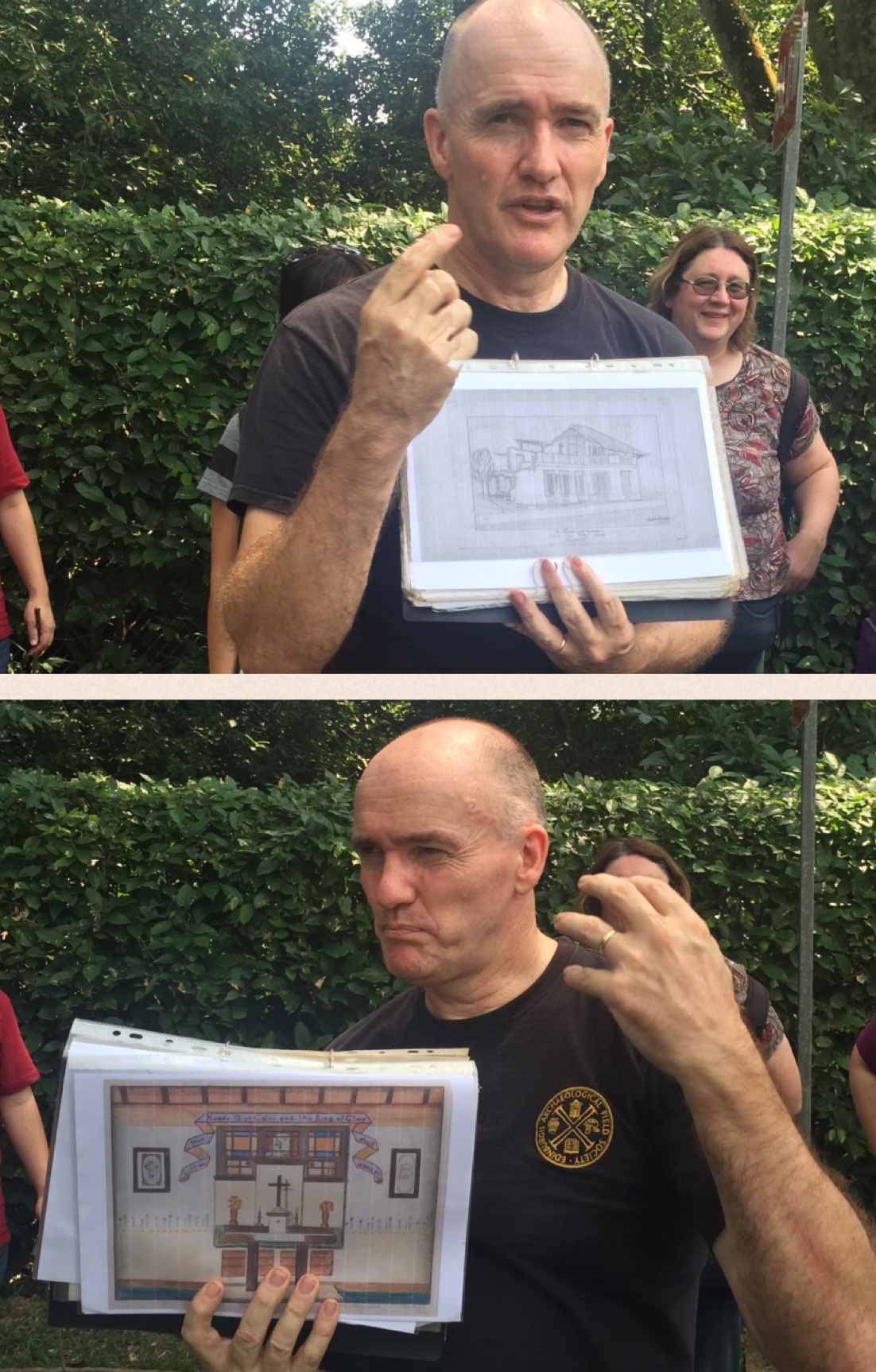
Jon showing chapel drawings by Private Robert Mitchell (photos by Simone Lee)
The house was badly damaged in battle. The chapel was on the second floor of the house, above the canteen. Because of the damage, the only access up the chapel was via the fire escape staircase at the back of house. Captain Andrews and a few volunteers repaired the remaining part of the room for the chapel and worked on designing the altar. It was plain and simple and they scavenged for materials they could find around the area – pieces of glass and transparent paper for the stained glass windows above the altar, yellow clay and Reckitt’s Blue for paintings on the wall.
The altar cross was bought from the Mortuary Chapel at Alexandra Hospital. Mother Mary and a scroll with the Bible verse; “Lift up your heads, O ye Gates and the King of Glory shall Come in” were painted. However, Captain Andrews was not able to draw faces very well hence he cut the face of Dorothy Lamour from a magazine and fitted it over Mother Mary’s. According to an account by Lieutenant Colonel Oakes, “Backlit from the outside the final image looked very impressive”.
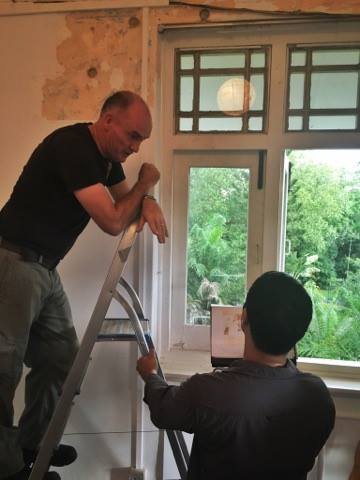
Jon Cooper explaining about the murals to Senior Minister of State, National Development Desmond Lee on a private visit. A small patch of the mural is visible above Jon’s head (photo Chua Ai Lin)
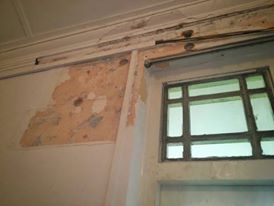
A close-up of the mural (photo Chua Ai Lin)
Jon’s research into the whereabouts of the chapel murals even when he had evidence of drawings from Mitchell, drew a blank when he interviewed survivors. He finally confirmed the location, when he realised, the men were more familiar with No.11 as the mess hall and canteen rather than the chapel. He was asking the wrong question!
Read more ‘The Prison Chapel’ from page 290 of ‘Tigers in the Park’
Today
All 19 houses at Adam Park which belong to the government are intact after repairs and available for rent. Most of the houses have been fenced and gated for security and privacy. House No.7 previously tenanted by National University of Singapore Society (NUSS) Guild House is at present unoccupied. No.7 and No.11 together with a handful of others are awaiting for new tenants. Without live in tenants, the buildings tend to wear out faster. But it is prime rentals and the market is weak.
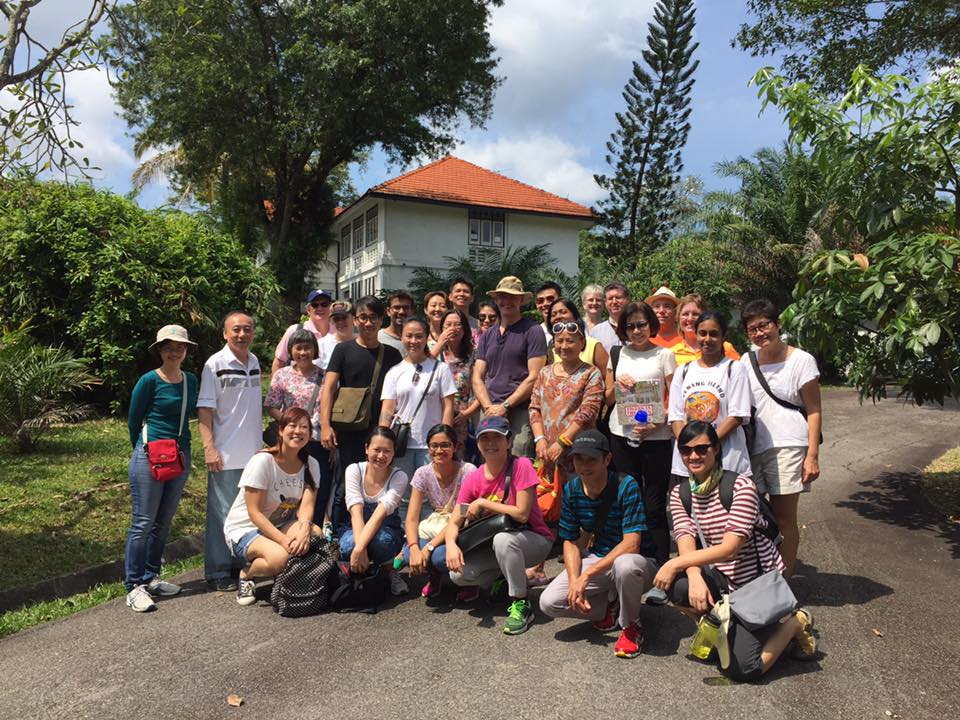
Group picture of Jon’s last public tour of Adam Park, for now (photo by Bianca Polak)
Jon Cooper hopes that the estate will be preserved and protected by authorities. He believes that it is a heritage site that still has much to offer in research, and a tangible reminder of the stories that he and his team has uncovered. And because of its historical significance, the site can still be kept as residences by promoting low impact heritage, such as the small groups he has been conducting walks for, which don’t encroach on the privacy of residents and respect boundaries.

Jon Cooper’s tour becomes interactive when participants help reenact scenes from the battle (photo by Simone Lee)
Archaeology
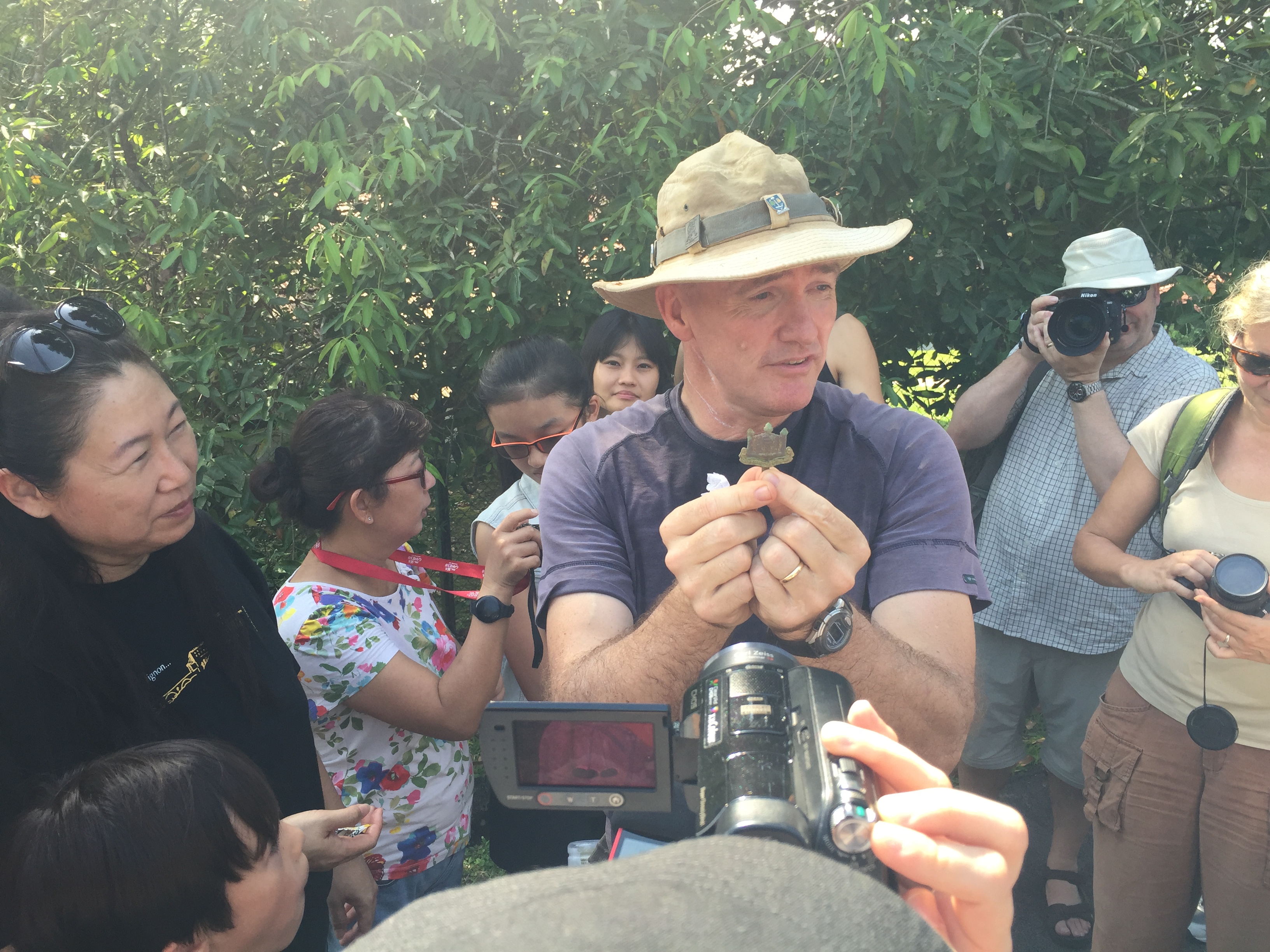
Jon showing participants a Cambridgeshire cap badge, one of the many items found during the archaeology projects (photo by Simone Lee)
Jon Cooper started The Adam Park Project (TAPP), organising residents and recruiting volunteers to do archaeological work at the estate. Over 7 years, more than 1200 World War 2 artefacts have been dug up following 21 metal detector surveys and two excavations. The artefacts are now with the Iseas-Yusof Ishak Institute and Singapore History Consultants.
The artefacts and the stories behind some of the items, such as artillery shells, military badges, gas masks, and 19th century coins, have also been catalogued in TAPP’s Virtual Museum: http://www.adamparkproject.com/virtual-museum/
Tigers in The Park
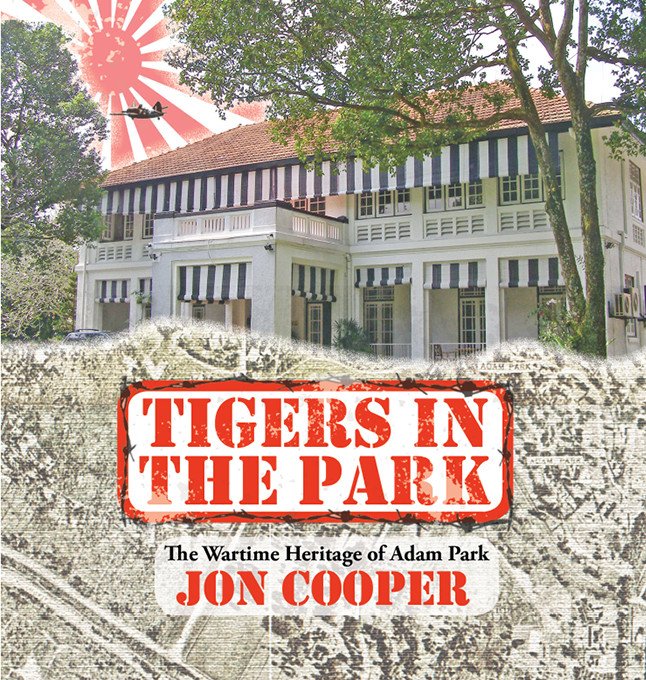
Jon’s book is divided into four section, -section 1 covers civilian life in the estate before the war, 2, the battle at Adam Park, 3 POW life, and finally Adam Park, post war – comes with icons and QR codes leading to the Virtual Museum , a website which also allows visitors to comment and interact hence, allowing updates and amendments to the book to be made at real time.
Tigers in the Park can be purchased at larger bookstores and also online:
https://www.ethosbooks.com.sg/products/tigers-in-the-park
“We shall not cease from exploration
And the end of all our exploring
Will be to arrive where we started
And know the place for the first time.
Through the unknown, remembered gate
When the last of earth left to discover
Is that which was the beginning.”
(T S Eliot, “Little Gidding”)
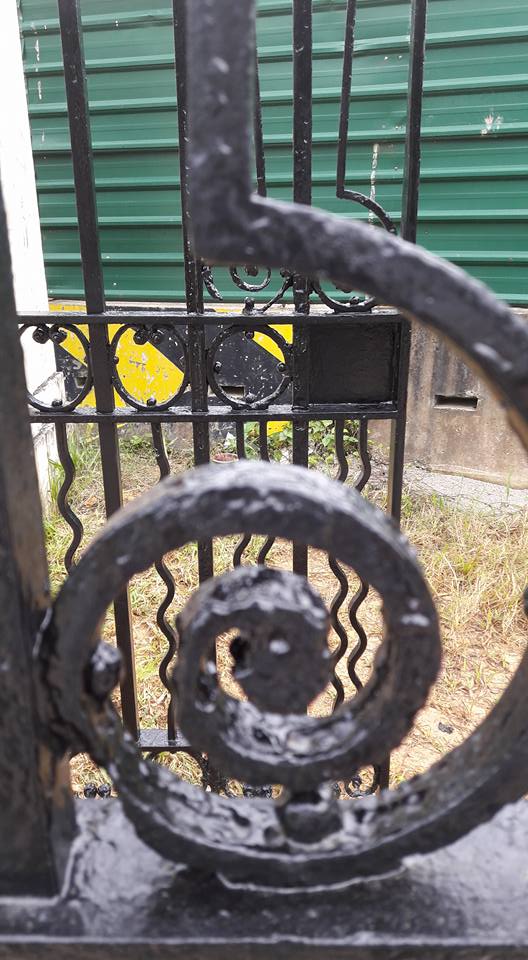
The gates of Bukit Brown are now “reunited” with the pillars in the new entrance to the cemetery.
Painted black – which was established to be a common outdoor colour for gates in the past – it looks like a very different pair of gates from five years back in 2011, but its form and substance, remains.
It will take some getting use to as we all come to grips with the vast changes to the landscape of memory markers that are now being undertaken. But in time, we hope when the dust has settled, and the mechanical cranes no longer dot the landscape, there is much the community can contribute to in restoring the sense of arrival, that once welcomed us into our past.
Until then here is look at the now and the before in photographs which speak to us poignantly of what was lost. A special thanks to Leong Kwok Peng of Nature Society whose facebook album I had raided for photos of the gates circa 2011/2013.
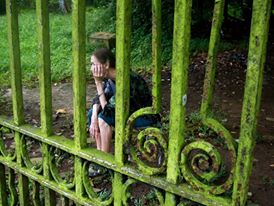
“They also serve who only stand and wait.” John Milton. The Gates, September 2011 (photo Leong Kwok Peng)
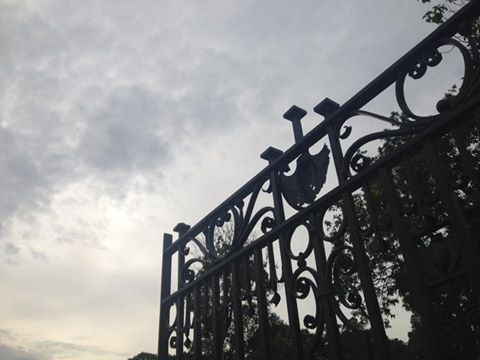
The Gates 30 July, 2016 (photo Claire Leow)
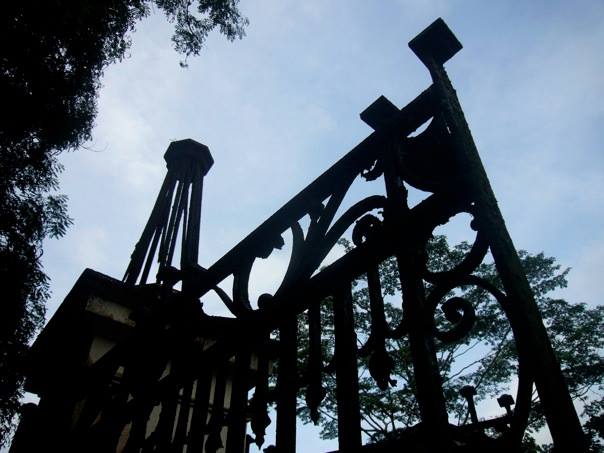
The Gates at the old entrance in 2013 (photo Leong Kwok Peng)
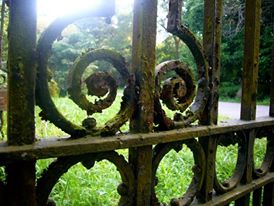
Gates, Sept 2011 (photo Leong Kwok Peng)

Gates, 30 July 2016 (photo Catherine Lim)
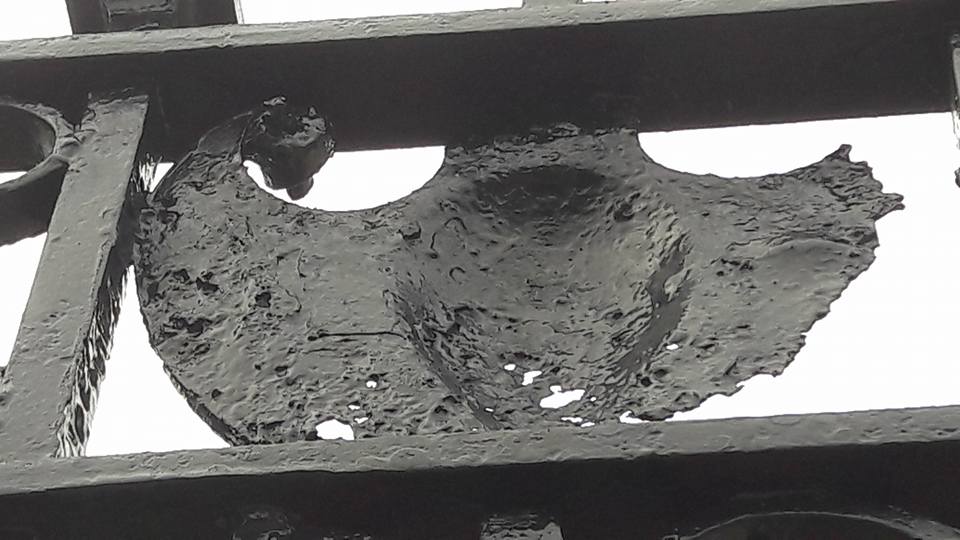
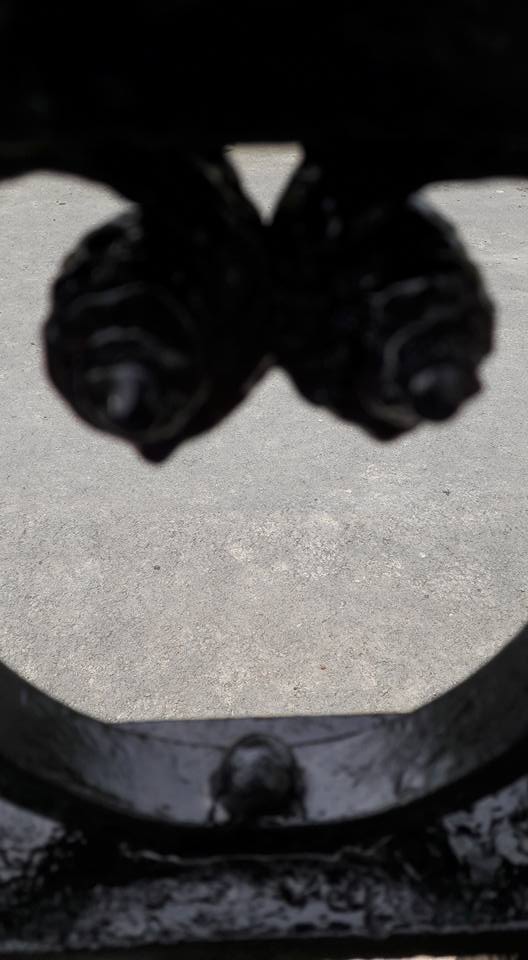
“Bat” 30 July 2016 (photo Catherine Lim)
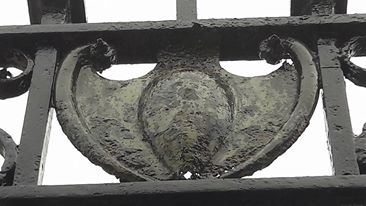
“Bat” 30 July 2016 (photo Catherine Lim)
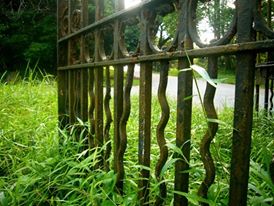
Gates September 2011 (photo Leong Kwok Peng)
Gates 30 July,2016 (photo Catherine Lim)

Reps from atbb, NHB and MND with Fusion Clad Precision checking out the gates (photo Catherine Lim)

The hinges are in working order, 20 July 2016 (photo Catherine Lim)
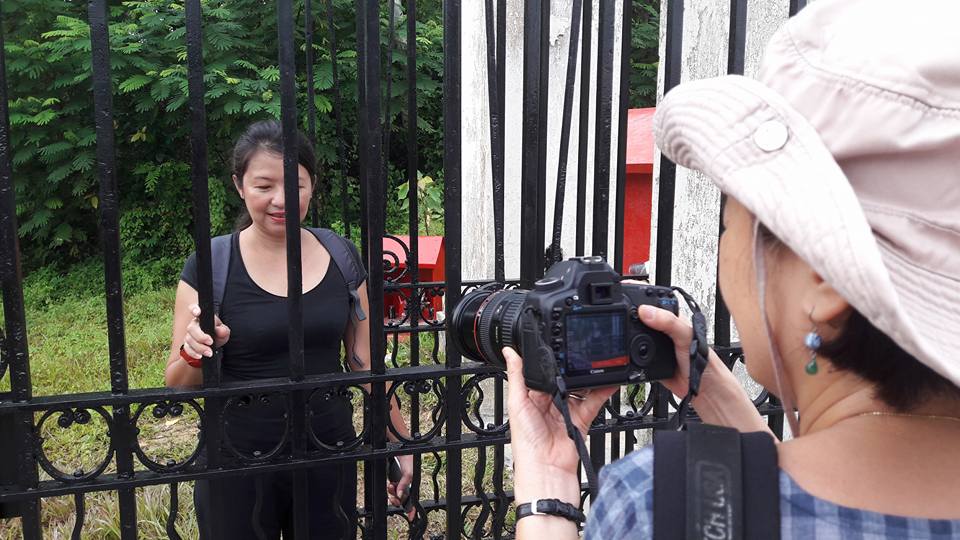
Fusion Clad representative explaining the challenges faced in restoration (Catherine Lim)
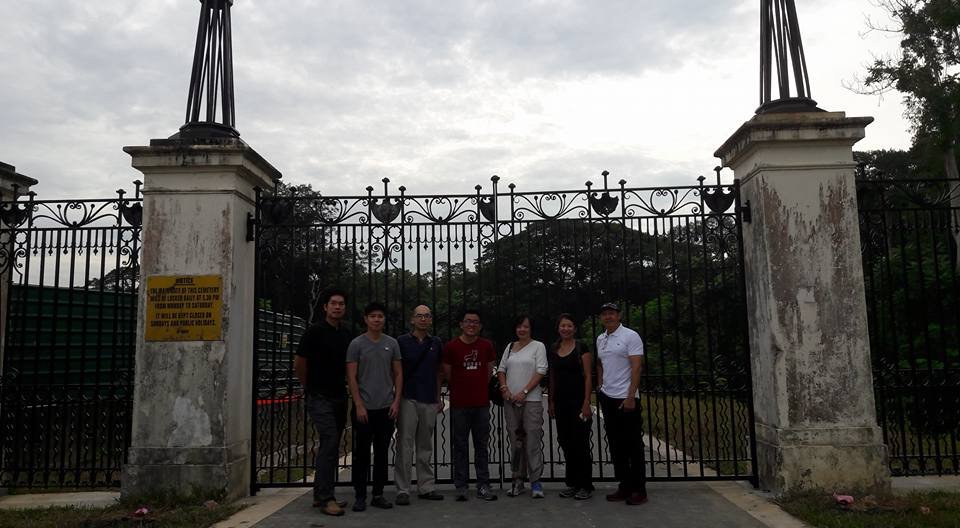
Customary group shot. 30 July 2016 (photo Catherine Lim)
On 25 July 2016:
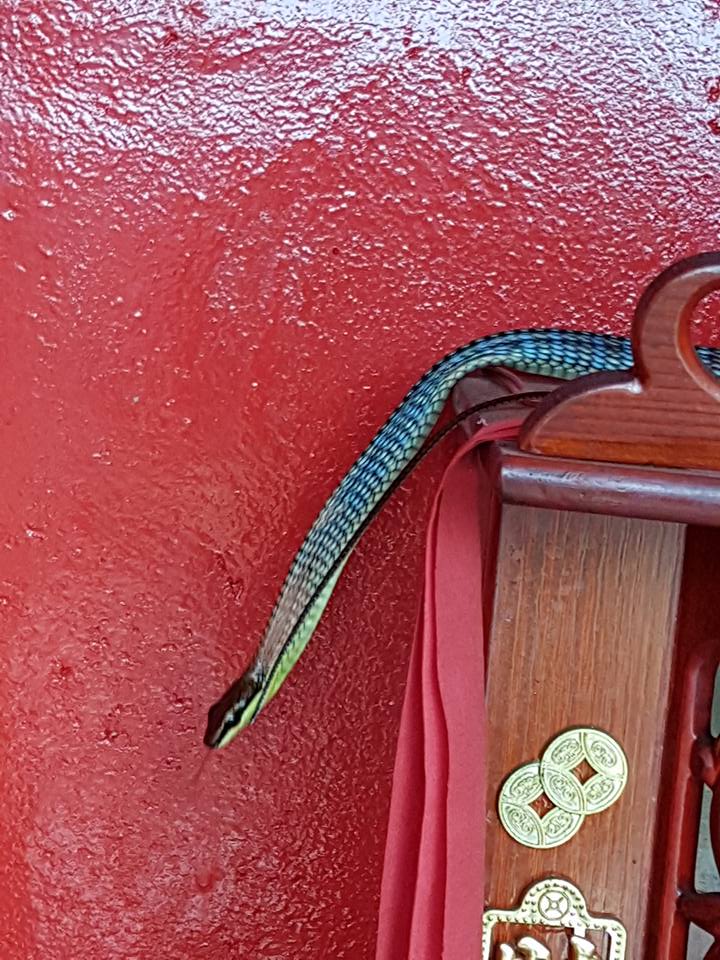
On the first day of installation, a snake was spotted at the altar of the Earth Deity (photo Serene Lee)
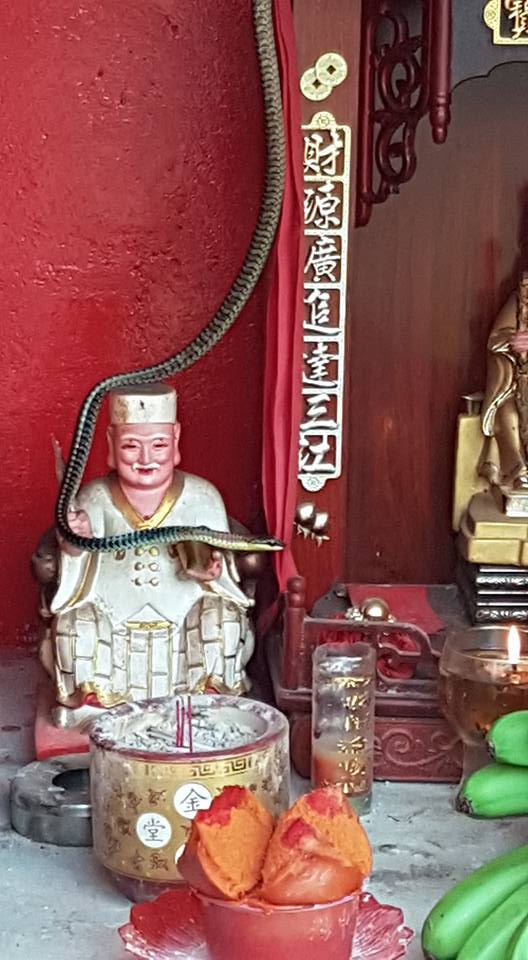
Embracing the “Datuk Kong” on its way to the “Tu Di Gong” or Earth Deity” 25 July. 2016 (Photo Serene Lee)
“Ampersand” A new beginning (photo Catherine Lim)
*************
A postscript on the installation
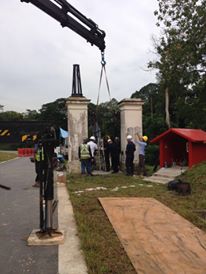
Start of installation 25th July 2016 (photo from a well wisher)
The installation began on Monday 25th July and was anticipated to take 5 days but all went well and by Wednesday, it was in place and on Saturday 30 July, 2016, All Things Bukit Brown together with officers from the the National Heritage Board and Ministry of National Development had a viewing with a briefing from Fusionclad Precision which had undertaken restoration works over a more than 6 months.
A report on the restoration process is available here
Blog post compiled by Catherine Lim
They now have a brand new shelter – we have been informed by a credible source – which was “upgraded” by Fusion Clad Precision (of their own initiative), the company commissioned by the National Heritage Board to restore the gates.
Photos captured by Brownie volunteers help document the “sheltering” of the deities which we believe are the efforts of a community who work behind the scenes.
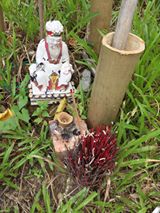
An unsheltered Earth Diety also known as Tu Di Gong or Tua Pek Kong taken sometime in May 2016 by Bianca Polak before a new shelter was put in place.
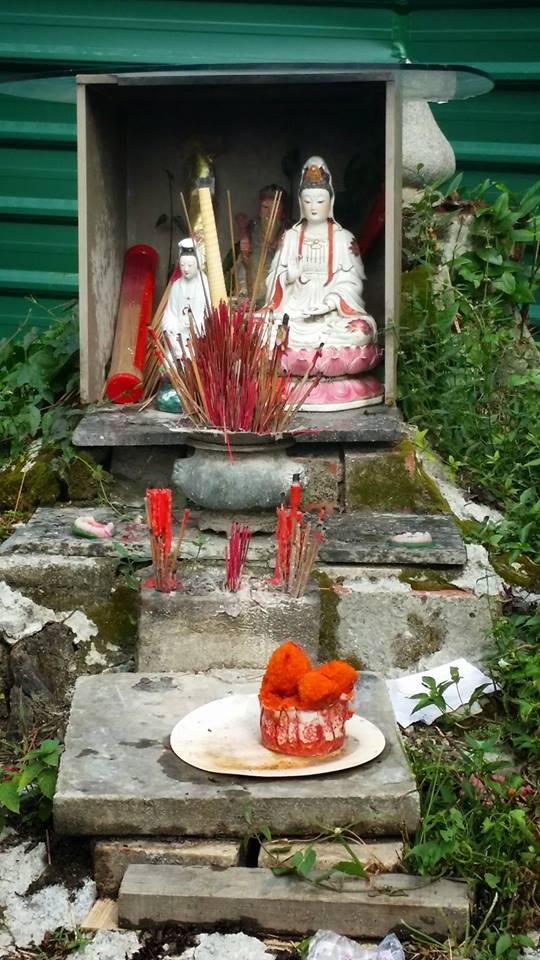
Guanyin captured in 2015 by Darren Koh before the gates were moved. According to Darren, Guanyin is a heavenly deity unusual for a cemetery which is traditionally the purview of the Earth Deity . But then, this is Guanyin who will take any form necessary to help humankind.
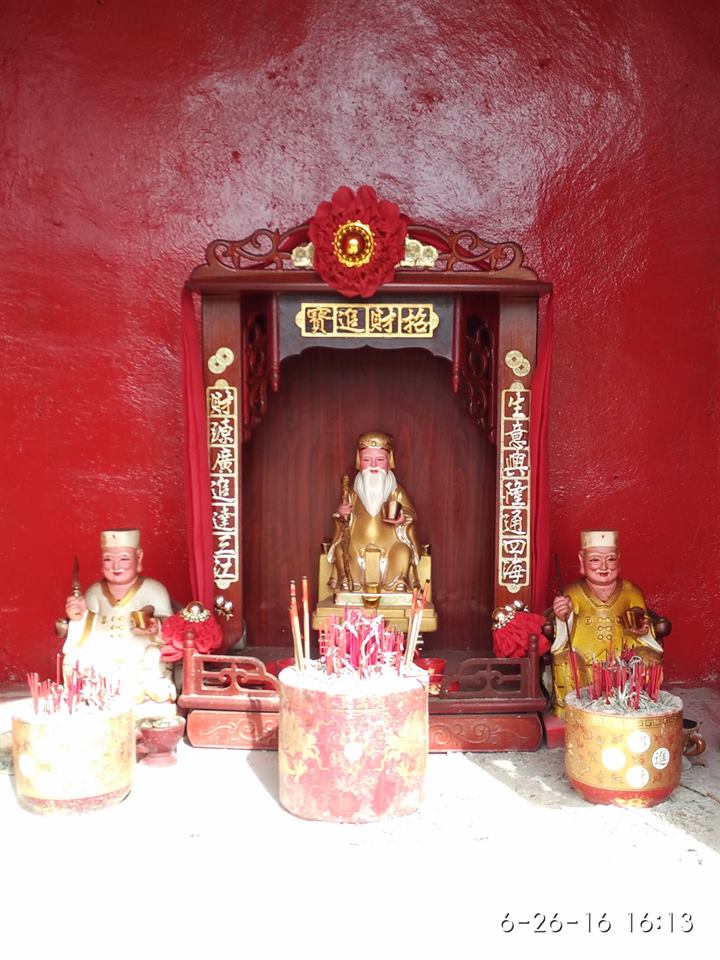
Fast forward to June 2016, and the altar, now relocated along with the gates, have now been “regularised” with the disappearance of the Guanyins, and the installation of a “new” Tua Pek Kong flanked by two Datuk Gongs, one on each side. (photo by Darren Koh)
The “upgrade” by Fusion Clad include the paint job and sensor lights, shelving and a dry place to store joss sticks and with even a lighter in place (although the last may have been placed there by others for convenience). The community who work at Bukit Brown have been observed by Brownies to pay respects before they start each construction work day as a mark of respect and request blessings for a “safe environment”
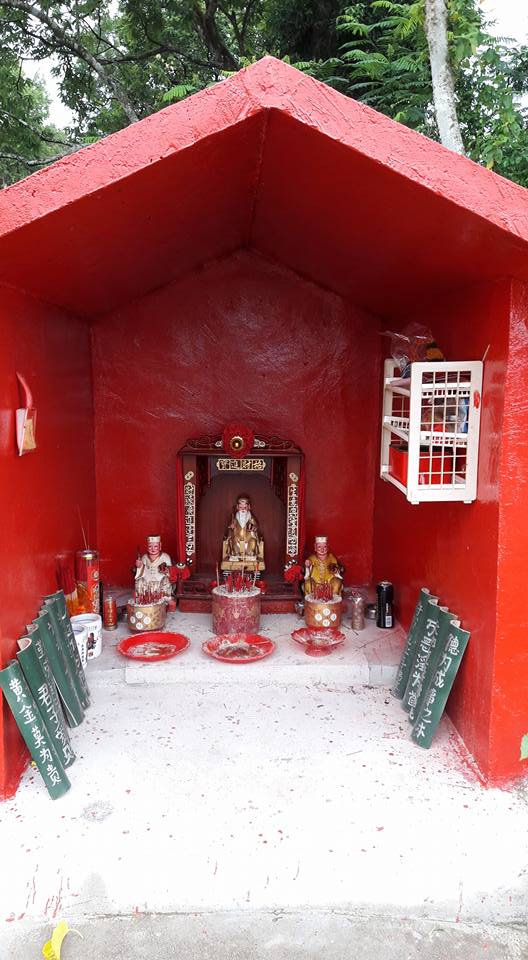
Lighter hidden out of sight (photo Catherine Lim)
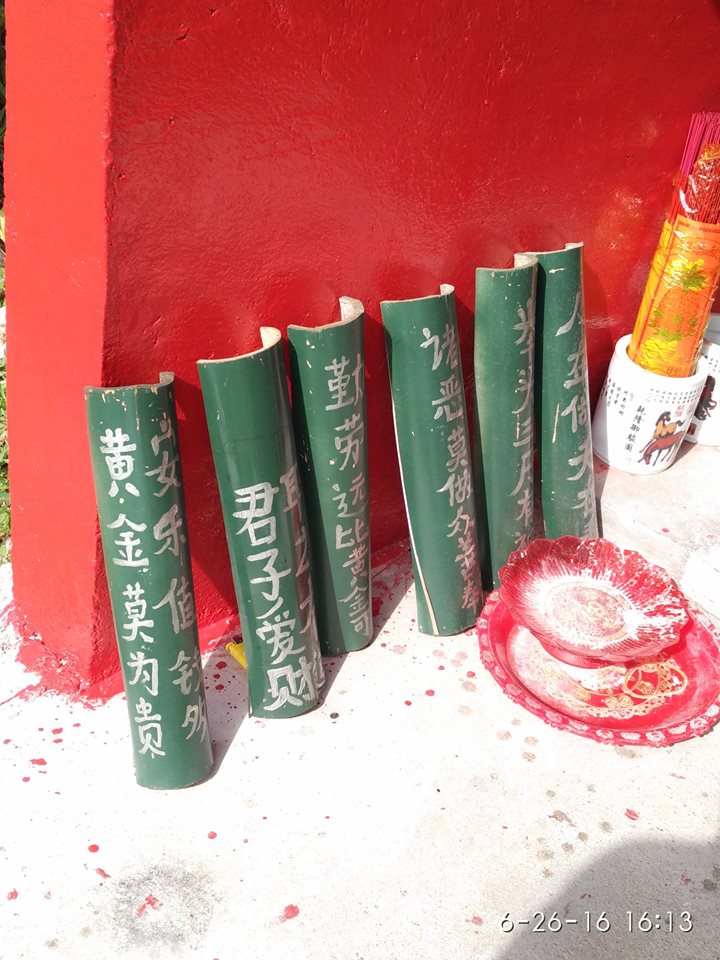
Together with this new shelter interesting is the emergence of the green bamboo inscribed with felicitations – not our local tradition, according to Darren and he wonders wonder what is the story behind them (photo June 2016 of bamboo inscriptions on left side of altar by Darren Koh)
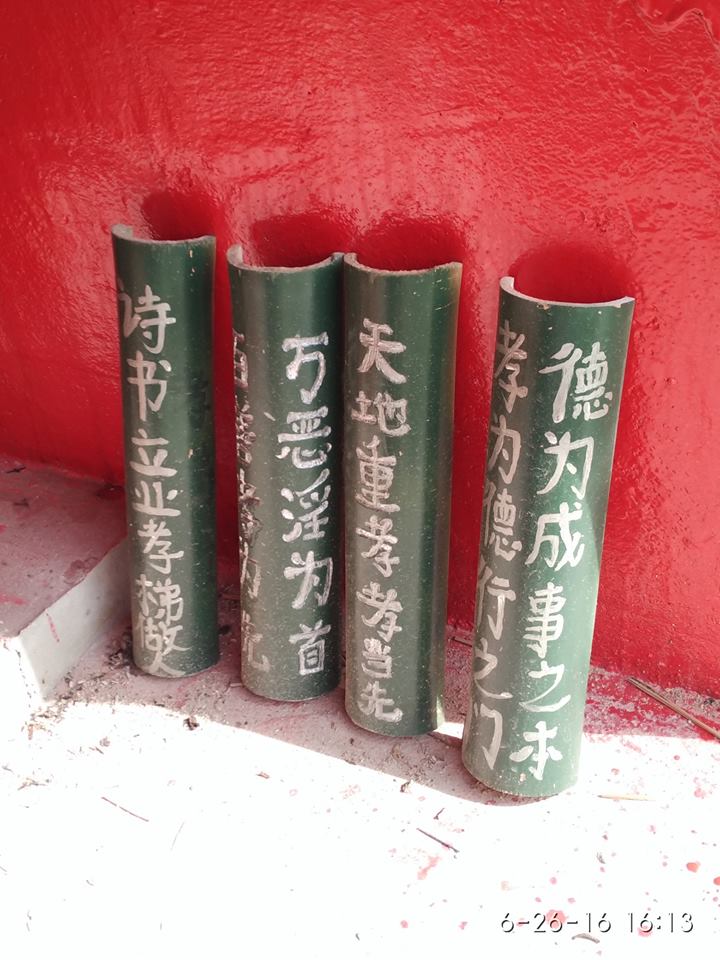
Bamboo inscriptions on right side of altar (June 2016 photo by Darren Koh)
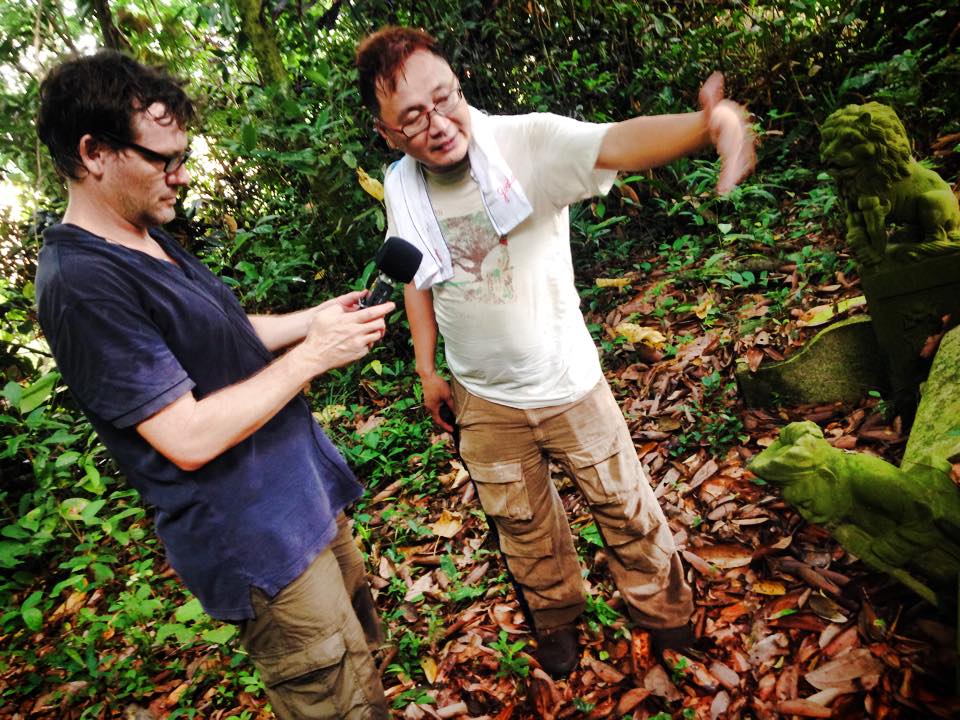
Raymond Goh being interviewed for “Outlook” on May 14 (photo AJ Leow)
The news broke this morning and was headlined “The Outlook 15”
We are pleased to share breaking news that Raymond Goh has been shortlisted as the top 15 from among 50 inspiring individuals in their home countries nominated by listeners to “Outlook” – a weekly radio programme on the other BBC – The British Broadcasting Corporation aka The Beeb.
He sits in good company among indefatigable individuals who have survived against the odds and individuals who strive each day in challenging environments to make life a little better; from granting wishes to the terminally ill to being a voice for survivors of unspeakable tragedies; from Sierra Leone to our Singapore, where our nominee gives voice to the dead in order that our past has a future. The full report can be found here
The nomination was submitted at the end of April 2016 by A.J Leow.
In his submission to the BBC nominating Raymond Goh in under 200 words (the limit) he wrote:
The Bukit Brown Cemetery (BBC) was largely a forgotten site in urban Singapore until the government announced plans in 2011 to build an 8-lane highway across it and exhume for a start 4,000 graves. Raymond and his brother Charles then started to explore the site. They organized guided tours and were soon joined by more volunteers known as Brownies.
Raymond has since discovered more hidden tombs and linked many descendants to forgotten ancestors who include the real early pioneers who founded schools, banks, clan associations, public parks and lent their names to some 50 streets in Singapore. Besides his frequent sojourns to BBC in his trademark white towel and T-shirt, Raymond also combs newspaper, clan and other archives.
As a result of his research, the Brownies even got BBC listed on the World Monument list and was recognised as Advocacy Organisation of the Year 2014. Their efforts have inspired new heritage trails, award-nominated plays and new books — all thanks to our very own tomb whisperer (and Indiana Jones) who has inspired a revival of Singapore’s own history.
The news that the submission was accepted came by way of a feature interview on the BBC World Service radio programme, Outlook “They call me Singapore’s Tomb Whisperer” conducted at Bukit Brown with Raymond and his nominator. The recording can be found here
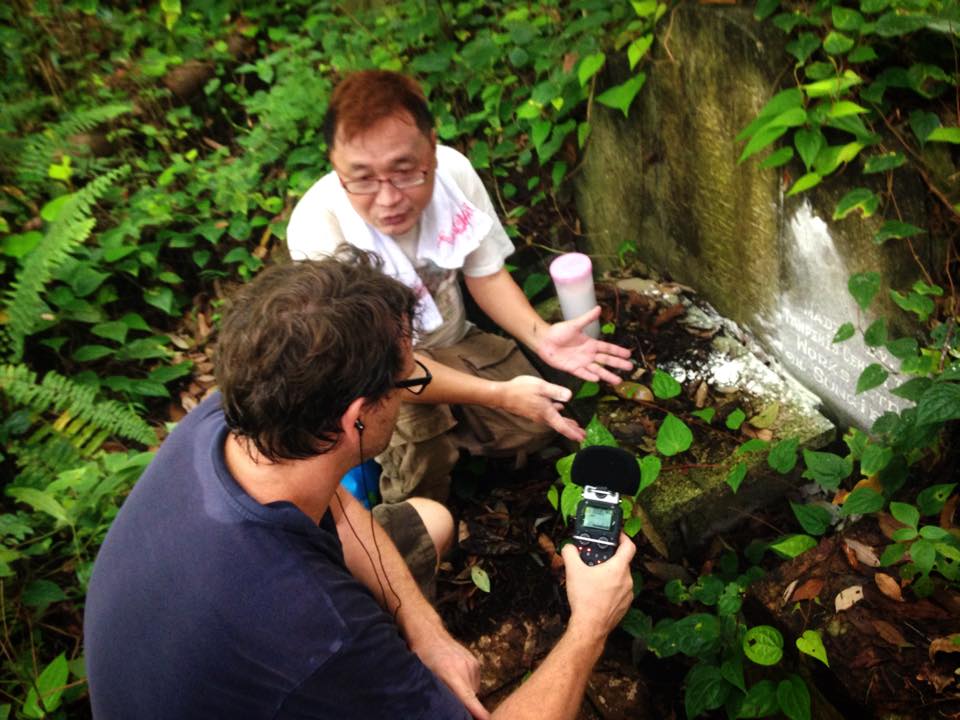
Explaining tomb inscriptions (photo AJ Leow)
In sharing the news this morning that he had been shortlisted, Raymond posted on his FB page:
“From 50 to 15…..truly humbled and overwhelmed by this shortlist. I have all the Bukit Brown community volunteers and tombkeepers who have accompanied me on my journey for the past 10 years to thank. Without their encouragement, support and assistance, would not have walked so far. And of course my brother Charles, partnering me along the road ….”
For more on the passion and dedication of Raymond and Charles in uncovering our lost heritage, read The Goh Brothers – A Decade of Exploring, a decade of Sharing
Our best wishes and congratulations to Raymond, as someone posted, onward to the final 3.
Recent Comments